

When I bought the LUCKY fish finder last spring, I did what most people do. I read the reviews, watched the casting videos, and talked myself into thinking it would be the thing that finally showed me what was under the water at Rollins Lake. And in a way, it was. But it took me about six trips to learn what the box, the listing, and half the online reviews do not tell you. This is the honest version, the stuff I wish somebody had said to me before I spent the money.
The LUCKY is a castable unit. You tie it to your line, chunk it out there, let it float, and read the bottom on the little screen in your hand. The idea is simple and it works, mostly. The catch is that the word mostly is doing a lot of work. Range, accuracy, and battery life all have limits that only show up once you are actually standing on a bank with the wind in your face and a cold line on your fingers.
The Quick Verdict
A handy castable finder for shore and small-boat fishing, but its real range is half what the box claims and the battery needs charging more often than you expect.
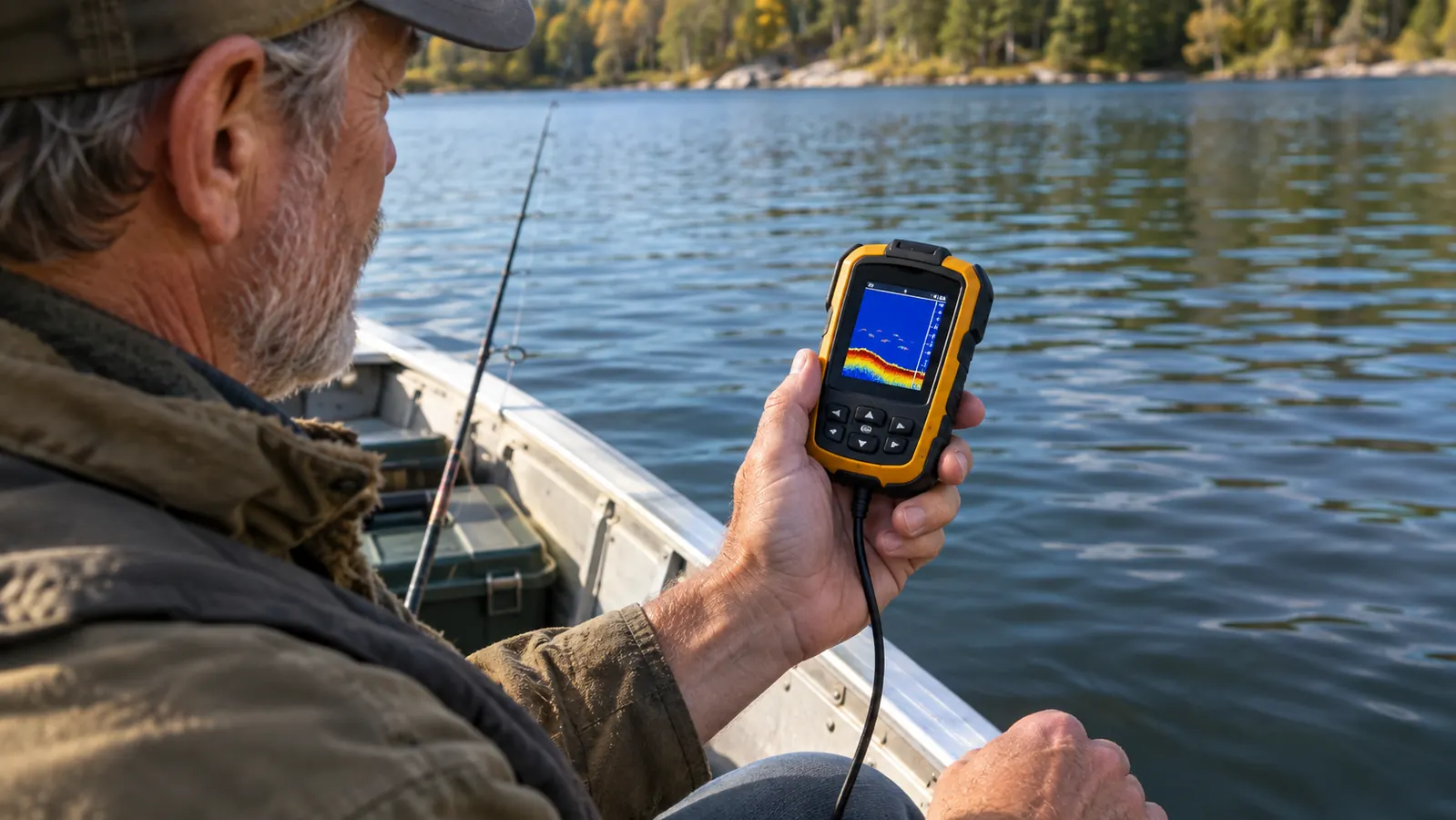
Amazon Check Today's Price →A handheld look at what is under your boat
If you fish from shore or a 14-foot aluminum boat like I do, the LUCKY can show you bottom structure and fish before you waste an hour casting blind. It has real limits, and I list all of them below.
Amazon Check Today's Price on Amazon →How I've Used It
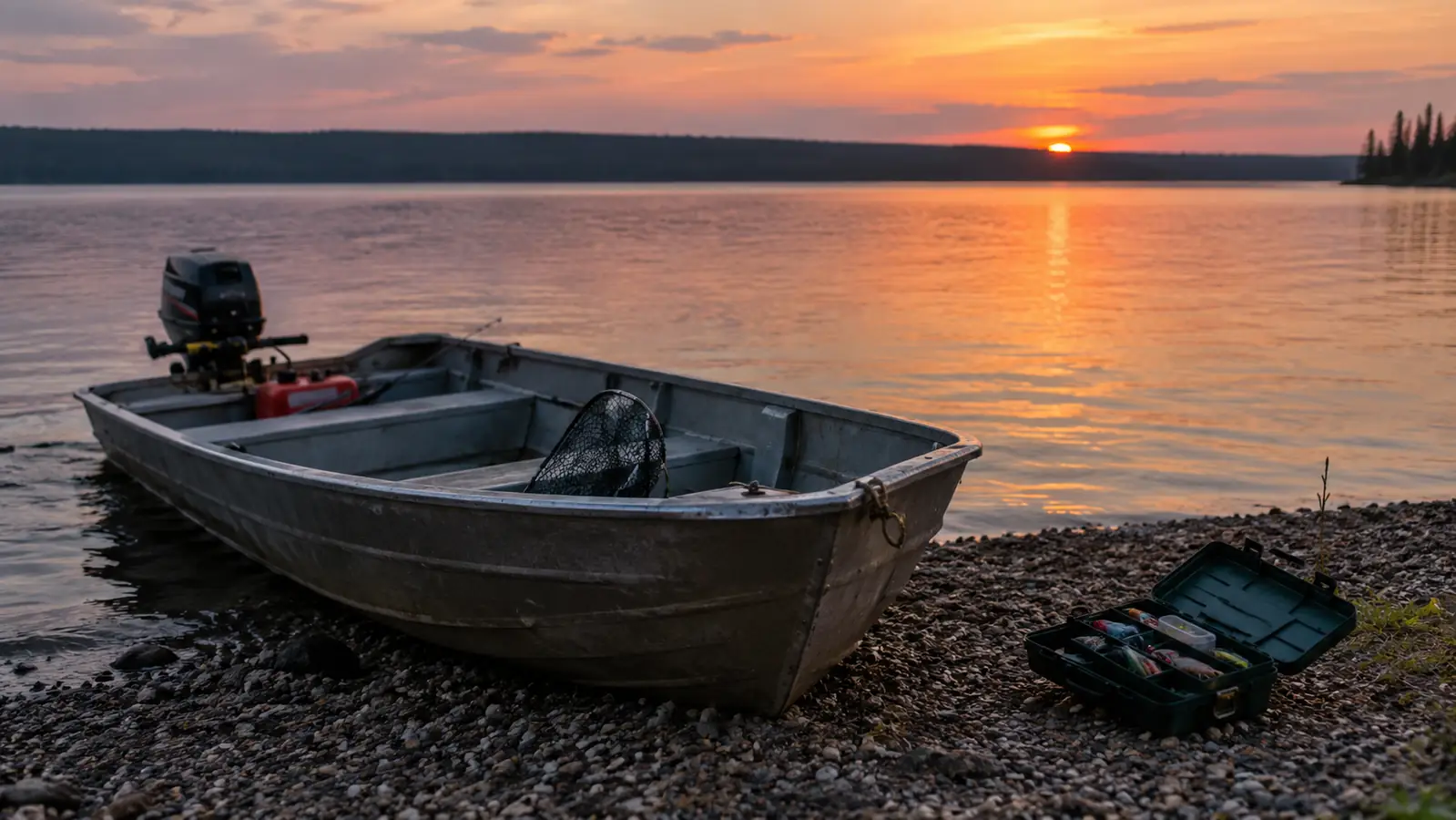
I run a 14-foot aluminum boat with a small outboard, and I fish for trout and bass on the Yuba River and at Rollins Lake. On most trips my wife Denise comes along. That means the LUCKY has been used two ways: cast from the bank while we set up camp, and dropped over the side of the boat while we drift a stretch of the Yuba. I would guess I have used it on about fifteen trips since last spring, some of them three or four days long.
The unit comes with the finder head, a small screen, and the transducer that does the actual work. You tie the included line to the device, cast it out, and wait for it to settle. The screen shows depth, bottom type, and little icons where it thinks fish are. The controls are simple enough that I did not need the manual, which is saying something for a man who reads instructions only when everything else has failed.
Here is what the listing does not tell you. The advertised range of a hundred feet or so assumes calm water, a clean line, and a gentle cast. On a windy afternoon at Rollins, with a chop on the water and a line that twists, you are lucky to get clean readings past fifty or sixty feet. The unit drifts, the transducer rocks, and the screen starts showing you a lot of noise that looks like fish but is just the surface bouncing around.
I should say plainly that I bought this with my own money. Nobody sent it to me and nobody asked me to review it. That matters because a lot of what I read about the LUCKY before I bought it came from people who got it free, and the free ones tend to leave out the weak points. I have no reason to flatter it. It has weak points, and I have laid them out above.
The Real Range
I tested the LUCKY the way I actually use it, not the way the product photos show it. On a calm morning with no wind, casting from the gravel shore of Rollins Lake, I got clean, readable bottom readings out to maybe seventy feet. Past that, the screen got fuzzy and the depth numbers started jumping around. On the same lake, two days later, with a stiff breeze and whitecaps, I could not trust anything past forty feet.
Part of this is physics and part of it is the design. The transducer hangs below the floating head, and the whole thing bobs with every wave. A rock-solid reading requires the transducer to point straight down. When the unit is riding a chop, it tilts, and the cone of the sonar sweeps sideways instead of down. There is no way around it with a castable unit, and the LUCKY is not the only one with this problem. But nobody puts that in the review highlights.
The practical takeaway is simple. The LUCKY is a near-shore tool. If you want to read the bottom at the edge of a drop-off thirty feet from the bank, it will do that all day. If you think it will map out the far side of a wide cove, you will be disappointed. I have learned to cast it where I plan to fish, not where I wish I could fish.
How Accurate Is It Really
For depth, the LUCKY is honest. When I dropped it over the side of the boat in water I already knew, the depth numbers matched my measured line almost every time, within a foot or two. Bottom type, meaning mud versus rock versus weed, came through clearly enough that I could pick where to anchor. That part of the unit earns its keep.
Fish icons are a different story. The unit marks things it thinks are fish, and sometimes it is right and sometimes it is showing you a weed bed, a thermocline, or a pocket of bait. I have pulled the boat over an icon, dropped a line, and caught nothing more than a snag. I have also watched the screen light up with marks and landed three trout in twenty minutes. Treat the fish icons as a suggestion, not a promise, and you will be happier with the LUCKY.
The other accuracy issue is lag. The screen updates slowly compared to a fixed fish finder mounted to the boat. When you are drifting, the bottom you are reading on the screen is the bottom you passed several seconds ago. It does not matter much when you are anchored or casting from shore. It matters when you are moving. I have learned to slow the boat down or stop completely before I trust a reading.
Battery Life
This is the part that annoyed me the most, because it is the part nobody mentions. The LUCKY charges by a cable and the battery is built in. On a full charge, I got about a day and a half of steady use, maybe five or six hours of actual on time spread across an afternoon and the next morning. That sounds fine until you are three days into a trip with no power at the campsite.
My truck is a 2014 Tacoma and it has a 12-volt outlet, so I could charge the LUCKY while we drove. That is the saving grace. But if you camp somewhere without a vehicle outlet nearby, or you expect to charge it from a power bank, plan ahead. The unit does not have a replaceable battery, and when it dies, it is dead until you find a plug. I now charge it every evening at camp, the same way I charge my phone.
One more thing about the battery. The low battery warning is easy to miss. There were two trips where I thought I had plenty of charge, the screen went dark mid-afternoon, and I packed up early because I had not brought the cable to the shore. It is a small thing, but it is the kind of small thing that turns a pleasant afternoon into a short one. Throw the cable in the tackle box and you will be fine.
What Else Gets On Your Nerves
The castable design means you are tying and untying the unit from your line constantly. Every time you move spots, you reel in, untie, re-tie, and cast again. On a day when you hop between three or four spots, that adds up. I have also had the unit come loose mid-cast twice, once because I did not tie a proper knot. It floats, so I fished it back in, but it is worth using a reliable knot every single time.
The screen is bright enough in direct sun, which surprised me for a unit in this price range. The buttons are small and I have hit the wrong one more than once with cold fingers. And the case that comes with it is fine for the truck, but it does not float and it is not waterproof. The unit floats. The case does not. Keep that in mind when you are packing the shore bag.
One honest complaint I will add. The unit's line is short, so if you are casting from a high bank or a dock, the device may not reach the water cleanly. I fish mostly from shore and from the boat, so it has rarely been an issue for me. But a friend who tried it off a tall dock had to rig extra line before it would read at all. Worth knowing before you buy it for dock fishing.
The Phone App and Pairing
The LUCKY pairs with a phone app over a short-range connection, and the app is where you can log a rough map of where you fished. I have used it maybe a dozen times. It works, but it is clunky. Pairing fails about one time in three, and you end up toggling the unit off and on to reconnect. Once it connects, the app shows the same bottom and fish data as the screen, just bigger, which helps older eyes like mine.
I keep the app on the phone mostly for the mapping. It drops a breadcrumb trail of where you have cast and where the unit marked structure. On a lake I fish often, that trail has helped me remember where the drop-off is from one trip to the next. But I would not call it navigation software. It is a note pad with a picture, and that is all I expect from it.
What I Liked
- Genuinely useful for depth and bottom type from shore or a small boat
- Simple controls and a bright screen in direct sun
- Floats if it comes loose, which saved me twice
- Pairs with a phone app for basic trip mapping
Where It Falls Short
- Real range is half the advertised number in wind or chop
- Battery lasts about five or six hours and is not replaceable
- Fish icons are unreliable, treat them as a guess
- Screen lags when you are moving
The LUCKY is honest about depth and dishonest about fish. Learn which is which and it earns its place in the boat.
Who This Is For
If you fish from shore, or from a small boat like my 14-foot aluminum one, and you want to know the depth and the bottom before you commit to a spot, the LUCKY is a reasonable buy. It is portable, it fits in a tackle box, and it does not need mounting holes or a permanent transducer on your hull. For a weekend camper who fishes a couple of times a month, it covers the basics without the fuss of a fixed unit.
I also think it is a good fit for someone who fishes several different places in a season, the way I do between the Yuba and Rollins Lake. A fixed finder is tied to one boat and one mounting spot. The LUCKY goes from the bank to the boat to a friend's dock without any tools. That flexibility is the real reason I keep it in my gear.
Who Should Skip It
If you fish a big lake or a river with heavy current and you need to read bottom structure at real distance, buy a proper fixed fish finder with a mounted transducer. The LUCKY will frustrate you. Its range collapses in wind and moving water, and the lag will make you second-guess every reading. This is a near-shore tool, not a serious mapping instrument.
I would also tell a tournament angler or anyone who fishes every weekend to skip it. The battery is the limiting factor. Five or six hours of on time is fine for a casual afternoon, not for someone who has the unit running most of a full day. For that kind of use, a mounted unit with a proper power supply is the right answer, and the LUCKY is not trying to be that.
The Bottom Line
After fifteen or so trips with the LUCKY, I can tell you exactly what it is. It is a depth sounder that also guesses at fish, and it is best used close to shore or from a small boat that is not moving. It will not replace a mounted fish finder, and nobody should tell you it will. What it will do is tell you if there is water under your lure and what kind of bottom you are fishing, and for a lot of weekend trips, that is more than enough.
I keep it in my gear because it answers the one question I actually have most afternoons, which is whether the spot I am about to fish is worth the effort. It answers that question honestly, even if it is honest about its own limits too. If you go in with that expectation, you will not be disappointed, and you might catch a few more fish than you would have casting blind.
The bottom line on the LUCKY
For shore and small-boat fishing it does the job with limits you can plan around. If that sounds like your kind of fishing, check today's price on Amazon and see if it fits your gear.
Amazon Check Today's Price on Amazon →