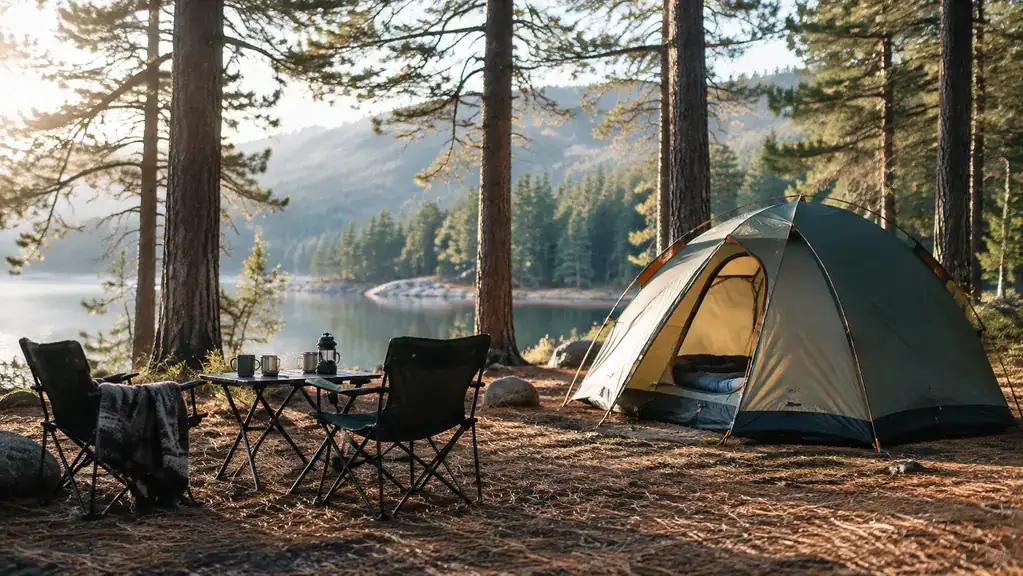
The Coleman Sundome went on its first trip with us on a Friday in May last year, and it has not missed a weekend since. Denise and I live outside Grass Valley, and most of our trips run the same way. We load the Tacoma after work, drive up into the Tahoe National Forest, and try to have the tent up before the light starts to go. Most weekends it is a two-night trip. A few times a year we stretch it to four or five nights when the fishing is good and the forecast is clear.
I have slept in a lot of tents. Thirty-one years maintaining county roads put me in enough of them, and the years of fishing the Yuba and Rollins Lake since have added more. I did not expect much from a dome tent at this price. Two seasons later, it has earned a permanent spot in the truck bed.
The Quick Verdict
For two people who camp most weekends and want a tent that goes up fast, stays dry, and does not fall apart, the Sundome has done everything we asked. It is not a mountain shelter and it is not light. It is a weekend tent that works.
Amazon Check Today's Price →The tent that has lived in our truck for two full seasons
A dome tent that sets up in ten minutes, stays dry through Sierra storms, and has not needed a single repair. Check today's price on Amazon.
Amazon Check Today's Price on Amazon →How I've Used It
The routine is the same almost every Friday from spring through fall. Denise and I load the Tacoma with the coolers and the rods, and I toss the Sundome bag into the bed behind the wheel well. We drive the back roads up from Grass Valley into the Tahoe National Forest, and we try to be at the site with the tent up before the light starts to go. Most weekends it is a two-night trip. A few times a year we stretch it to four or five nights when the fishing is good and the forecast is clear.
The tent gets used for both kinds of trips we take. The shore camps along Rollins Lake for bass, and the river camps on the Yuba for trout. It rides in the truck for both, and it has never once been the reason a trip got cut short. In two seasons it has probably seen forty nights of actual use, plus a few more nights in the yard when I was airing it out after a wet trip. That is enough nights to know how a tent behaves, and enough to be honest about what it does well and what it does not.
We chose the 4-person size even though it is just the two of us. Denise was clear about that from the start, and she was right. We wanted room for the cots and the gear without living on top of each other, and we wanted to be able to move around inside when the weather kept us in. For a couple, the 4-person is the right call. The 2-person would work for a single person who sleeps alone, but it is tight for two adults and any kind of gear.
Setup and Take-Down
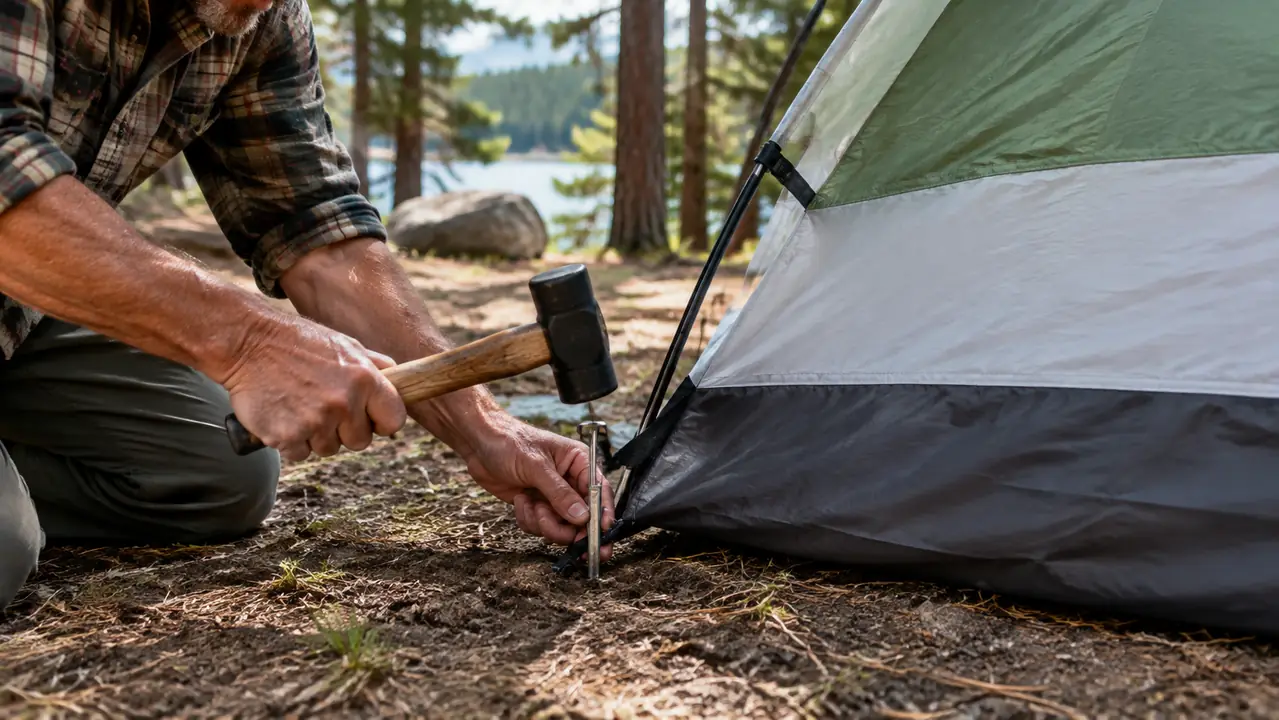
Coleman says the Sundome sets up in ten minutes. That is not marketing talk, it is the honest number. The poles run through continuous sleeves and the whole body is one piece of fabric, so there is no separate inner tent to wrestle with. You lay the tent flat, feed the poles through the sleeves, push the center up, and it is standing. The first time out it took me a little longer because I was learning the order of the sleeves. Now it is a ten minute job, and I can do it alone without Denise having to hold a pole.
The rainfly goes on after the tent is up. It clips at the corners and pulls over the top, and the whole setup, tent and fly and four corner stakes, is inside ten minutes on a calm evening. On a windy evening it is closer to fifteen, because you want the stakes in before the tent takes off on you. The stakes that come with it are the weak point. They bend if you meet a rock, and we have a lot of rocks up there. I replaced the factory stakes with heavier ones after the second trip, and that is the only modification I have made.
Take-down is just as quick. The fly comes off, the poles come out, and the tent folds into its bag. The bag is a simple drawstring sack and it is on the thin side. Mine has not torn, but I am careful with it, and I would not be surprised if it is the first thing to go. The tent packs into a bundle about the size of a large cooler, which is why it lives in the truck bed between trips instead of taking up space in the garage.
Weather: Rain, Wind, and the Cold Nights
The Sundome has seen its share of Sierra weather in two seasons. The rainfly is the real roof, and it has kept us dry through more than a few thunderstorms. We had one night on Rollins Lake where the rain came down hard for hours and the wind picked up. We stayed dry. The seams are factory sealed, and the bathtub floor does its job. I still use a ground tarp under it, and I recommend that for any tent, no matter how good the floor is.
Wind is the part to be honest about. The Sundome is a dome, so it sheds wind better than a cabin tent, but it is not a mountaineering shelter. On one exposed night above the lake, the gusts had the walls flapping and the fly rattling all night. It held, because I had every stake and guy line in. If you skip the stakes, it will not hold up in a real blow. Staked properly, with the fly pulled tight, it has handled everything we have thrown at it, and I have stopped worrying about the forecast.
Condensation is the honest downside. On cold, still nights, the inside of the fly gathers moisture, and if you brush against it, that moisture ends up on your sleeping bag. We learned to keep the windows open a crack and to avoid touching the walls. It is normal for a single wall tent, but it is the one thing I would warn anyone about before they buy. It is not a leak and it is not a defect. It is just what happens when warm bodies meet cold mountain air.
Room, Layout, and the Little Things
Inside the 4-person, there is enough room for two cots and the gear bags between them. The center height is about six feet, and at five ten I can stand up in the middle of the tent without crouching. That matters when you are getting dressed in the morning and it is raining outside. The walls slope, so the usable space is in the middle, but for two people it never feels cramped, and the footprint fits easily on a standard campsite pad.
The floor has held up well. We use a tarp under it, and the floor itself shows no wear after two seasons. No leaks along the seams, no damp corners, no thinning fabric where the cots sit. The zippers on the door and the windows have stayed smooth, and that is the thing that surprises me most, because zippers are usually the first thing to fail on a budget tent.
The little details are where Coleman gets it right. There is a loop at the top for a lantern, and a small pocket on the wall for a phone or a headlamp. The door has a mesh panel that lets air in while keeping the bugs out, and the windows have the same mesh. On a warm evening we leave the fly off entirely and sleep with the mesh zipped, looking up at the trees through the roof. It is a simple tent, but the simple things are done well.
What Two Seasons Did to It
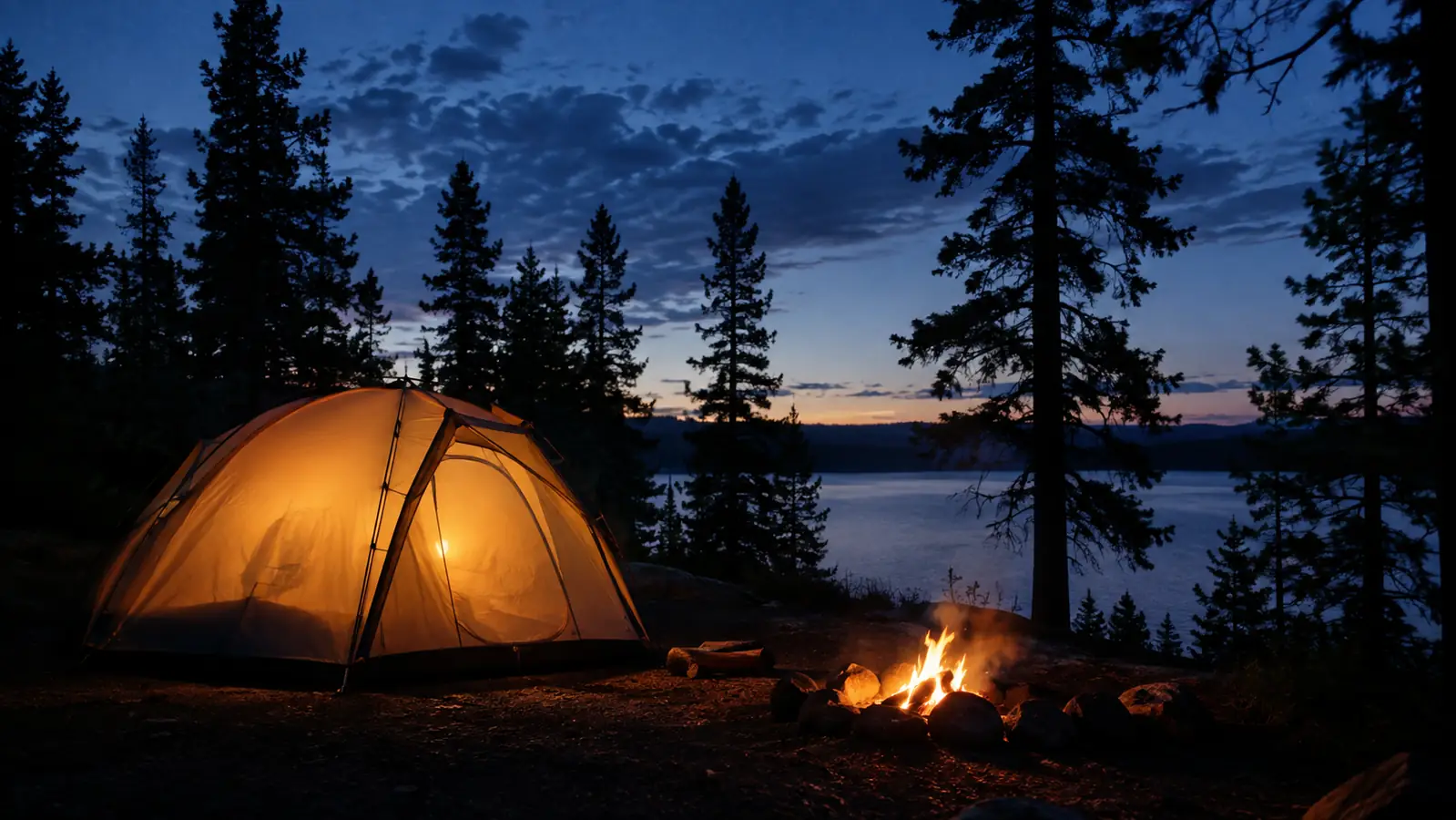
After maybe forty nights of use, the honest report is that the tent looks like a tent that has been used, but it does not look worn out. The fabric is clean. The poles show no cracks or splits. The zippers still run smooth. The only real wear is on the stakes, which I already mentioned, and the storage bag, which is thin. Nothing has torn, nothing has failed, nothing has needed repair. I have had tents that cost twice as much that did not make it this far.
The thing that impresses me is the consistency. I have owned tents that started sagging by the second season, or where the fly attachments pulled loose, or where the floor got damp no matter what. The Sundome has not done any of that. The pole sleeves are still tight, the clips still hold, and the fly still fits the way it did the first night. It has not changed. That is the highest compliment I can give a piece of camping gear.
I will be honest that the Sundome is not a tent for a lifetime. The fabric is not expedition weight, and the poles are not heavy duty. But for a weekend tent at this price, the durability has been better than I expected. I went into this expecting to replace it after a season or two. Two seasons in, it is still going strong, and I do not see a reason to replace it this year.
Where It Falls Short
Condensation is the first thing to know about. On cold nights, moisture forms on the inside of the fly, and it can drip if you bump the walls. Keep a window cracked and do not brush the walls, and it is manageable. It is not a dealbreaker, but it is real, and it is worth knowing before you buy.
The rainfly sits high. It does not reach the ground, which means wind driven rain can reach the walls in a bad storm. We stayed dry in everything we saw, and the sealed seams and bathtub floor help, but I would not trust the Sundome in a severe storm with sideways rain. For our weekend trips, it has been fine. For exposed high country in a big blow, I would want something with a full coverage fly.
The single door is the other limitation. The person sleeping on the far side has to climb over the other person to get out at night. It is a small thing, and it has never actually bothered us, but it is worth knowing. Some tents in this size range have a door on each side. The Sundome does not, and it is a concession you make for the price.
Finally, this is a three-season tent. I would not trust it in heavy snow or in winter conditions. The poles would not take the load, and the single wall is not built for it. We camp spring through fall, so that is fine for us. If you camp year round in the mountains, or you winter camp at all, look elsewhere.
What I Liked
- Sets up in about ten minutes, even solo
- Stayed dry through two seasons of Sierra thunderstorms
- Room for two adults, cots, and gear in the 4-person
- Poles and zippers have held up with zero repairs
- Packs small enough to live in the truck bed
Where It Falls Short
- Condensation on cold, still nights
- Rainfly sits high, so heavy wind-driven rain can reach the walls
- Factory stakes bend easily on rocky ground
- Single door means climbing over your partner at night
- Not a winter tent
Two seasons, maybe forty nights, and the only thing I have replaced is the stakes. The tent itself has not needed a single repair.
Who This Is For
The Sundome is for the weekend car camper, plain and simple. If you drive to the campsite, want the tent up in ten minutes, and want to sleep dry without spending a fortune, this is the tent. It is ideal for a couple, and in the larger sizes it would work for a family with kids. It is the tent you load into the truck on Friday and do not think about again until Sunday. It does not demand anything from you, and that is exactly what a weekend tent should be.
Who Should Skip It
Skip the Sundome if you are a backpacker, because it is heavy and it does not pack small enough to justify the weight. Skip it if you camp in winter or in high, exposed country where the wind never stops, because it is a three-season tent with a high fly. Skip it if you need a big vestibule for gear, because the fly is minimal. And skip it if you are the kind of camper who wants one tent to last twenty years. The Sundome is built to be a good, honest weekend tent, and that is exactly what it is.
Still the tent in our truck after two seasons
If you are replacing a tent that finally gave up, or buying your first dome for weekend trips, the Sundome is the honest pick. See today's price on Amazon.
Amazon Check Today's Price on Amazon →