I've camped in the Tahoe National Forest most of my adult life, and I've owned a long string of tents. Most of them were cheap, and most of them taught me the same lesson the hard way. People I know who buy Coleman tents never seem to deal with broken poles, but I kept grabbing whatever was on sale. I'm 58, I spent thirty-one years as a county road-maintenance foreman, and I should know better by now.
It's always the poles. Fiberglass poles that flex once too far and snap clean in two. Two Julys ago we drove up from Grass Valley with the Tacoma loaded, found our spot off a forest road near Rollins Lake, and set up in the late afternoon. By Saturday morning the pole at the back corner had a crack in it you could see from across the tent. It hadn't even been windy. The thing just gave up overnight, the way cheap poles do.
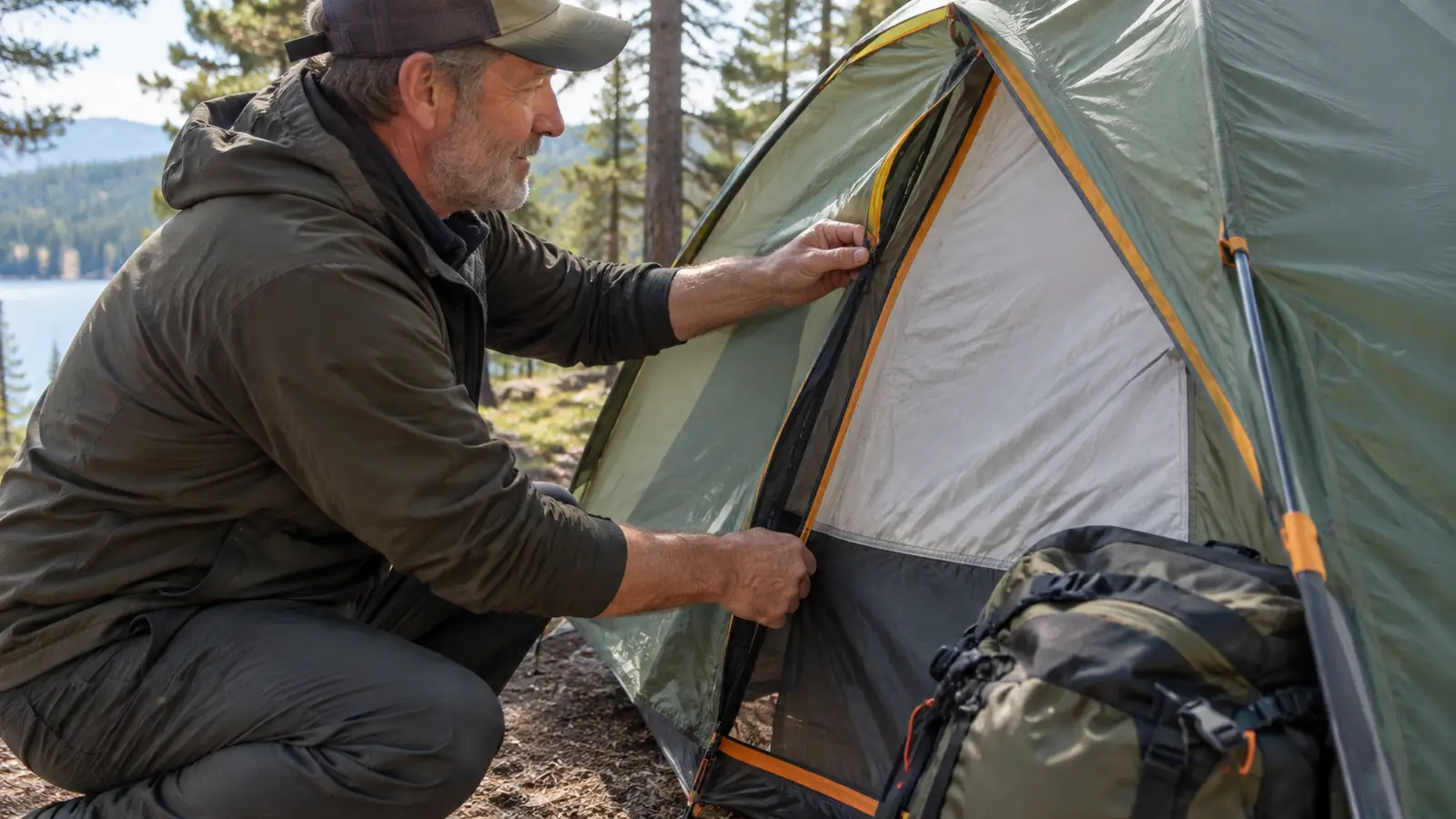
I tried to fix it the way I've fixed every pole since I was a kid: a splint of a stick, a lot of duct tape, and a prayer. It held for maybe an hour of breeze, then folded right at the repair. We spent the rest of that trip sleeping in the truck bed. That's fine for one night, but by the third night Denise was looking at motels, and I can't blame her. We'd driven three hours to get there, and we were ready to give up and go home.
That was the pattern for years. Buy a tent that looks fine in the store, set it up once in the yard, pack it, and then discover what it's really made of when the wind comes up or a storm rolls over the ridge. One tent lost a pole on the very first trip out. Another one leaked at the seams the first time it rained, and I spent a wet night trying to find where the water was coming in. I've gone through more replacement poles than I care to count, and every one of them cost me a trip.
I'm not a gear snob. I drive a 2014 Tacoma double cab, I fish out of a 14-foot aluminum boat on the Yuba River and at Rollins Lake, and I don't need the lightest anything in the catalog. What I need is a tent that doesn't hand me a handful of broken poles on a Saturday morning when I'd rather be on the water chasing trout.
So last spring I finally bought a Coleman Sundome. I picked it for two reasons. The dome shape spreads the load across all the poles instead of putting everything on one, the way those cheap ridge tents do. And Coleman has been making tents long enough that they've sorted out the details that matter. That was my thinking, anyway. What I found out over a full season of trips is that the thinking was right.
The pole at the back corner cracked by Saturday morning. That's the moment I stopped trusting cheap fiberglass.
A Tent That Doesn't Quit on a Saturday Morning
The Coleman Sundome uses a simple pole layout that sets up fast and holds up trip after trip. See today's price on Amazon.
Amazon Check Today's Price on Amazon →The first trip with the Sundome was four nights in late June at a spot up in the Tahoe forest, about an hour off the highway. I set it up in about ten minutes, which matters to me because I'd rather be on the Yuba by late afternoon than fighting a tent in the heat. The poles slide through sleeves on the dome, so no single pole carries the whole load. That's the part that's held up all season, through five trips and a couple of decent wind gusts that would have folded the old ones.
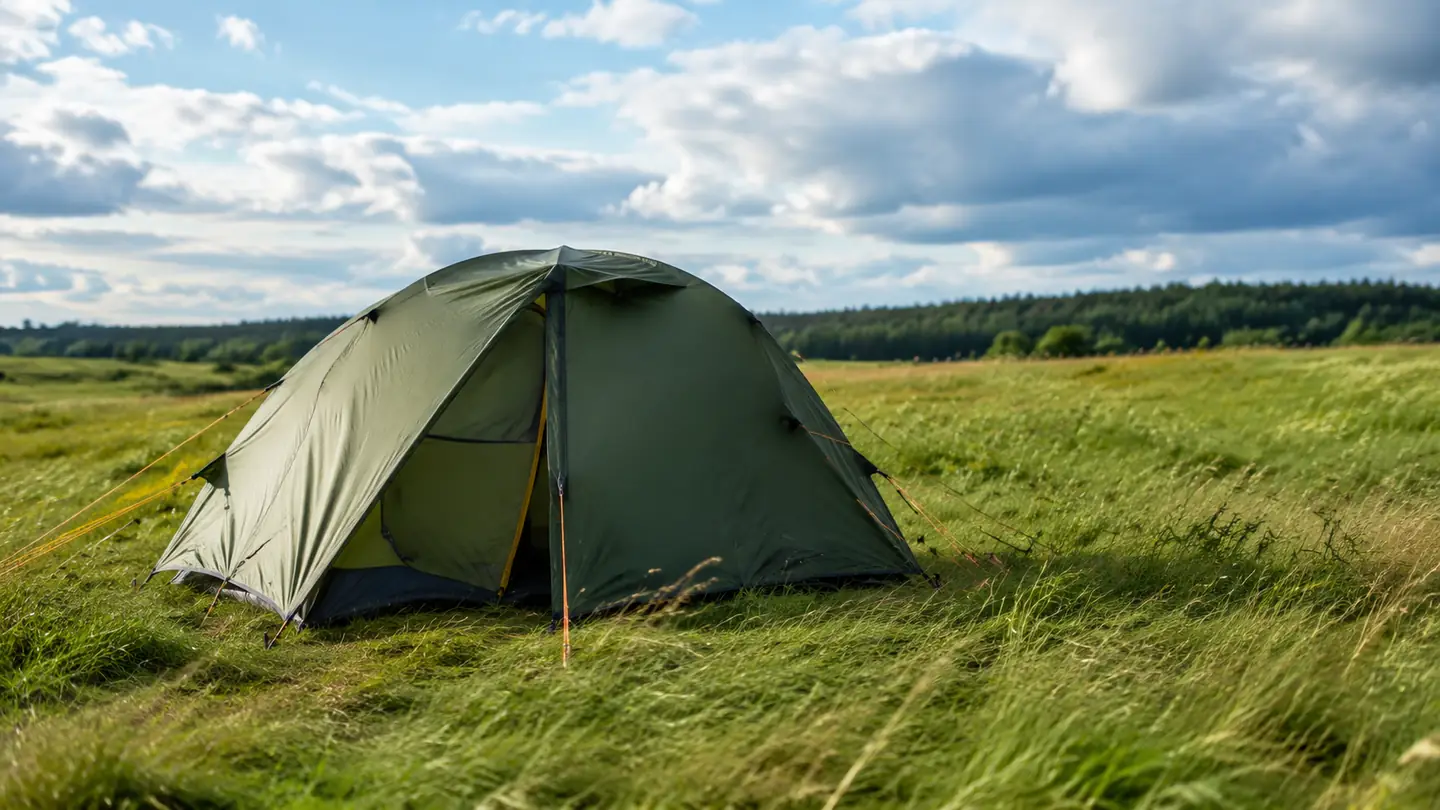
The second night we got a thunderstorm, one of those quick Sierra showers that come down hard for twenty minutes and then clear off. The rainfly covers the top and comes down over the sides, so the water ran off instead of finding its way in. I checked the seams the next morning out of habit, and they were dry. I've owned tents where that exact storm would have soaked everything inside, and I'd have spent the next day drying gear in the sun.
A small thing worth naming: the zippers. Cheap tents bind up when they get a little dirt in them, and there you are outside in the dark fighting a stuck zipper at 11 at night while the bugs get in. The zippers on this one have been smooth all season, even after a dusty weekend. Denise noticed the headroom, too. At 58 I don't want to crawl around on my knees to get dressed, and you can sit up in this tent without brushing the ceiling. We use the 6-person size for two cots and all our gear, and it feels almost roomy.
It's not perfect, and I won't pretend it is. The stakes it comes with are basic, and in rocky ground I swap them for better ones I already own. It's not a four-season tent, and on a cold windy night you'll feel the difference. But for the three-to-five-night trips we do, this is the most dependable tent I've had. I haven't bought a single replacement pole since last spring, and for me that's a first. I'd rather have that than a tent that's a pound lighter and breaks on the second trip.
One trip in particular sold me on it. Mid-September, we were up by the Yuba for the weekend. A front came through Friday night, wind strong enough that I got up once to check the stakes. The tent flexed and held. The next morning was clear, and we fished the riffles until dark. With the old tent, that same wind would have meant a broken pole, a ruined trip, and a long drive home with the gear half wet.
What I'd Tell You If We Were Sitting at My Kitchen Table
If you keep buying the cheapest tent and keep throwing away broken poles every year, you're not saving money. You're just buying the same disappointment twice, and you're losing weekends you could have spent fishing. You don't need to spend a fortune to fix it. You need a tent with a simple pole layout, a rainfly that actually covers the sides, and zippers that work in the dark. That's what the Coleman Sundome has been for me all season. Set it up once in the yard before you head out, check the poles, and then go enjoy your weekend. If it saves you one broken-pole Saturday morning, it's paid for itself.
Get the Tent That Lasts
After a full season of trips, the Coleman Sundome is the one I reach for first. Check today's price on Amazon.
Amazon Check Today's Price on Amazon →