

I didn't buy the LUCKY fish finder expecting much. It was cheap, it looked like a toy, and I figured it would either work or not. But it changed where I cast, and it started on a slow Saturday morning at Rollins Lake last October. That was the day I learned that the fish were not in the spots I had been fishing for years.
Denise and I had driven out with the Tacoma, the 14-foot aluminum boat on the trailer behind. We launched at the main ramp around seven. The water was flat, the sky clear, and the bass were not cooperating. We worked the points and the weed lines the way we always had, casting parallel to the shore, bouncing a senko off the bottom. By nine we had one small bass and a lot of patience. I remember thinking we should have stayed in bed.
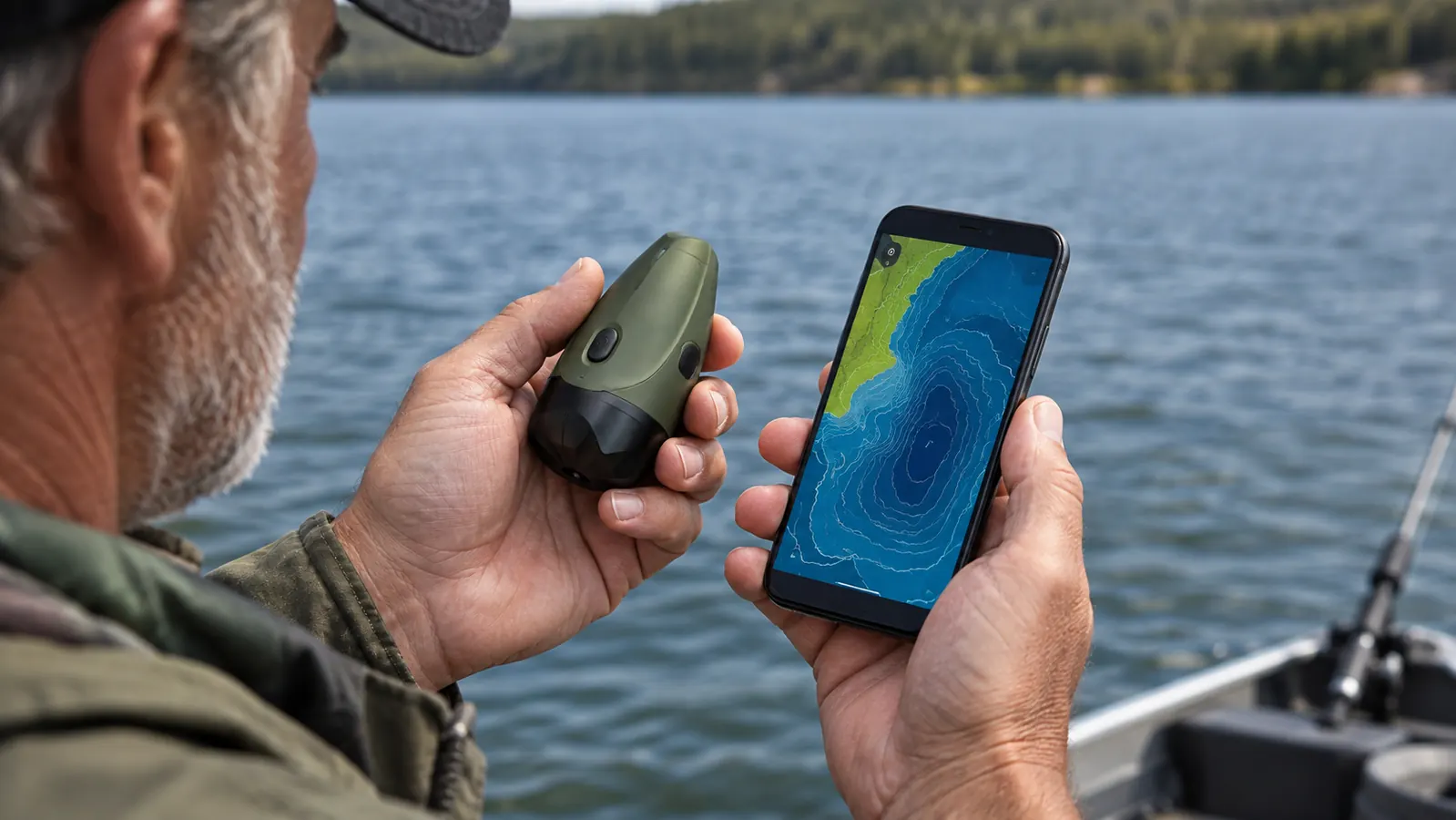
I had thrown the LUCKY finder in the boat box the week before, on a whim, after reading about castable sonar. I wasn't sold. I had watched a few videos and the idea seemed too good to be true: you cast the little transducer out, it floats, and your phone shows a map of the bottom. So I tied it to my line, hit the button on the phone app, and flung it out toward a spot I had never fished, a hundred yards down the bank where the water turned deep. I did it more to prove it wouldn't work than because I expected it to.
The first cast showed a clean, gradual slope. The second cast, twenty yards over, showed a drop-off that fell from six feet to fourteen in about ten feet of horizontal distance. That was the kind of structure fish love, and I had walked past it for years. I moved the boat, cast the senko right along that ledge, and on the third drift I hooked a two-pound bass that fought like it was twice that. Denise looked over and said, 'Well, that's something.'
We spent the rest of the morning finding drop-offs and humps and one sunken tree I never knew was there. We caught eight bass that day, more than we had caught on that lake in the past month combined. The fish were there the whole time. I just hadn't been fishing where they were. It was the first time I understood that the bottom shape matters more than the calendar or the weather.
The fish were there the whole time. I just hadn't been fishing where they were.
Find the drop-off, find the fish
The LUCKY portable finder shows you the bottom in real time, right on your phone. See today's price on Amazon.
Amazon Check Today's Price on Amazon →After that morning, I used the LUCKY finder every trip. It takes about a minute to set up: you charge the transducer, open the app, and pair it over Bluetooth. The unit itself is about the size of a deck of cards, and it floats, so you can cast it from shore or from the boat. I keep it in the glove box of the Tacoma, and it has survived a season of bouncing around in there without a scratch. The first time I charged it, I plugged it into the USB port in the truck and it was full in about an hour.
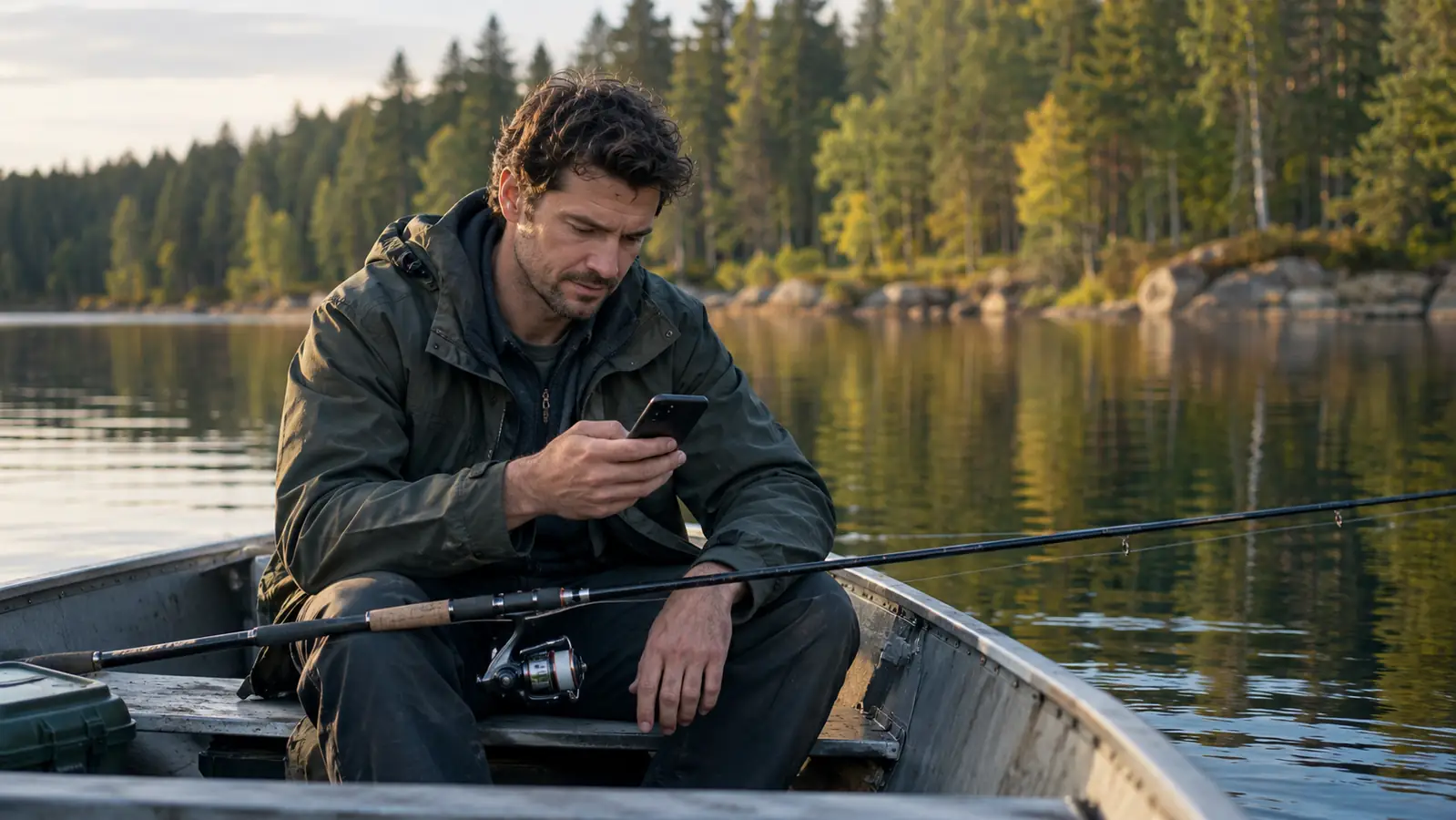
The app shows depth, water temperature, and a simple contour map. It's not a sonar unit you'd mount on a bass boat. The screen is your phone, so you have to keep an eye on it, and the range is maybe a hundred and fifty feet. But for a shore angler or a guy with a fourteen-foot boat, it tells you the one thing you need to know: where the bottom drops. That's where the fish hold. I've learned to look for ledges, points that drop off, and any spot where the depth changes fast.
I've used it on the Yuba River too, casting from the bank. The current makes the transducer swing a little, but you still get a clear picture of the bottom. I found a deep hole under an overhanging oak that I would have walked right past. I caught a nice brown trout there on a nightcrawler, and I've been back three times since. The finder paid for itself on that one fish, if you count the gas and the time I saved not fishing empty water.
The thing that surprised me most is how it changed the way I approach a new lake. Before, I would pick a spot based on what I could see from the bank or the boat. Now I cast the finder out first, wait for the screen to settle, and then decide where to fish. It's like having a map of the bottom in your pocket. I've used it to find drop-offs I would have missed, and I've caught more fish in the past six months than in the two years before that. On one trip to Rollins in November, I found a hump that came up to four feet from the surface in the middle of a deep bay. I anchored on top of it and caught three bass in an hour. That hump was maybe thirty yards from where I used to anchor, and I had never known it was there.
It's not perfect. The transducer is small, so it can't see into very deep water, and the app occasionally loses the connection if your phone is on low battery. But for the kind of fishing I do, it's more than enough. I've told a couple of friends about it, and one of them bought one after fishing with me for an afternoon. He said the same thing I did: it's cheap, it works, and it shows you something you couldn't see before. I also like that it doesn't require any permanent installation. No wires, no mounting bracket, no holes in the boat. You just charge it, throw it in the box, and forget about it until you need it.
What I'd Tell You If We Were Sitting at My Kitchen Table
If you came over for coffee and asked me about this finder, I'd tell you it's not a replacement for a real sonar unit, and it won't make you a better caster. But if you fish from the bank or a small boat and you've been casting at the same spots for years, it will show you a different bottom. You don't need to spend a fortune. The LUCKY finder does one job, it does it well, and it's cheap enough that you can afford to be wrong about it. I was skeptical, and now I don't leave home without it. It's the kind of tool that pays for itself in one good morning.
Cast where the fish actually are
See the LUCKY portable finder on Amazon and check today's price.
Amazon Check Today's Price on Amazon →