

I bought the KastKing Centron spinning combo in April of 2025, the week before the trout opener on the Yuba. My reasoning was plain: Denise had claimed my old spinning rod for bass, I needed a second rod in the boat, and the Centron was priced like a spare you could afford to scratch. Eight months and close to forty trips later, I can tell you what the product listing does not. The reel is better than the price suggests. The rod is the part you have to watch.
The short version is that the KastKing Centron is a fine second rod for shore fishing and small-boat work, and a frustrating first rod if you are new and expecting perfection. The drag is smooth for most of its range and then gets a hard spot. The line twist is real, and most of it is your fault, but the reel does not help you fix it. And the part that wears out first is the bail wire, not the drag or the gears. I have spent eight months learning all of it, and this is what I wish somebody had told me before I ordered.
The Quick Verdict
A dependable budget combo that earns its keep as a spare rod, but the drag is not as smooth as the ads claim, line twist is a real habit to learn, and the bail wire will need attention first. Buy it for what it is: a workhorse, not a flagship.
Amazon Check Today's Price →A budget combo that outlasts its price tag, with two honest flaws
If you need a dependable spare rod for shore or small-boat days, the KastKing Centron gets the job done. Learn the drag, fix your line-twist habits, and watch the bail, and it will serve you for years.
Amazon Check Today's Price on Amazon →How I've Used It
Between the last week of April and the middle of November, I put the Centron on maybe forty trips. Most were day trips to Rollins Lake, with the 14-foot aluminum boat on the trailer behind the Tacoma. A handful were three and four night camps in the Tahoe National Forest, where Denise and I fished the Yuba in the evenings and packed the rods in the truck bed between trips. The Centron lived in the rod holder on the boat for most of those hours, which means it took sun, rain, dust off the logging roads, and the occasional knock when I swung a net too fast or set a rod down on a gravel bank.
My setup was ten-pound monofilament on the spinning reel, with a small barrel swivel and a worm hook most days. I used it for stocked rainbow at Rollins and for smallmouth bass on the Yuba, and I switched to a spinnerbait in the fall for the bigger fish that moved shallow. I did not baby the combo. If a rod is going to live in a boat, it has to take a few scratches and a splash of lake water without complaining, and the Centron did.
I keep a small notebook in the truck and jot down what works and what does not. That notebook is where most of this review comes from, because eight months of notes are a lot more reliable than my memory of a good day or a bad one. The dates I mention here are real, and the failures are real. I did not get paid to say any of this, and I have no reason to soften the rough edges.
One trip stands out. In early June, Denise and I camped three nights at a spot off the Bowman Lake road in the Tahoe National Forest. I fished the Yuba for two evenings with the Centron, working a two-inch paddle tail on a quarter-ounce head. The rod cast it clean and far enough to reach the far bank, and I landed three smallmouth in the first hour. That was the evening I decided the combo was a keeper, despite the quirks I would find later.
The Drag Is Good, Not Great
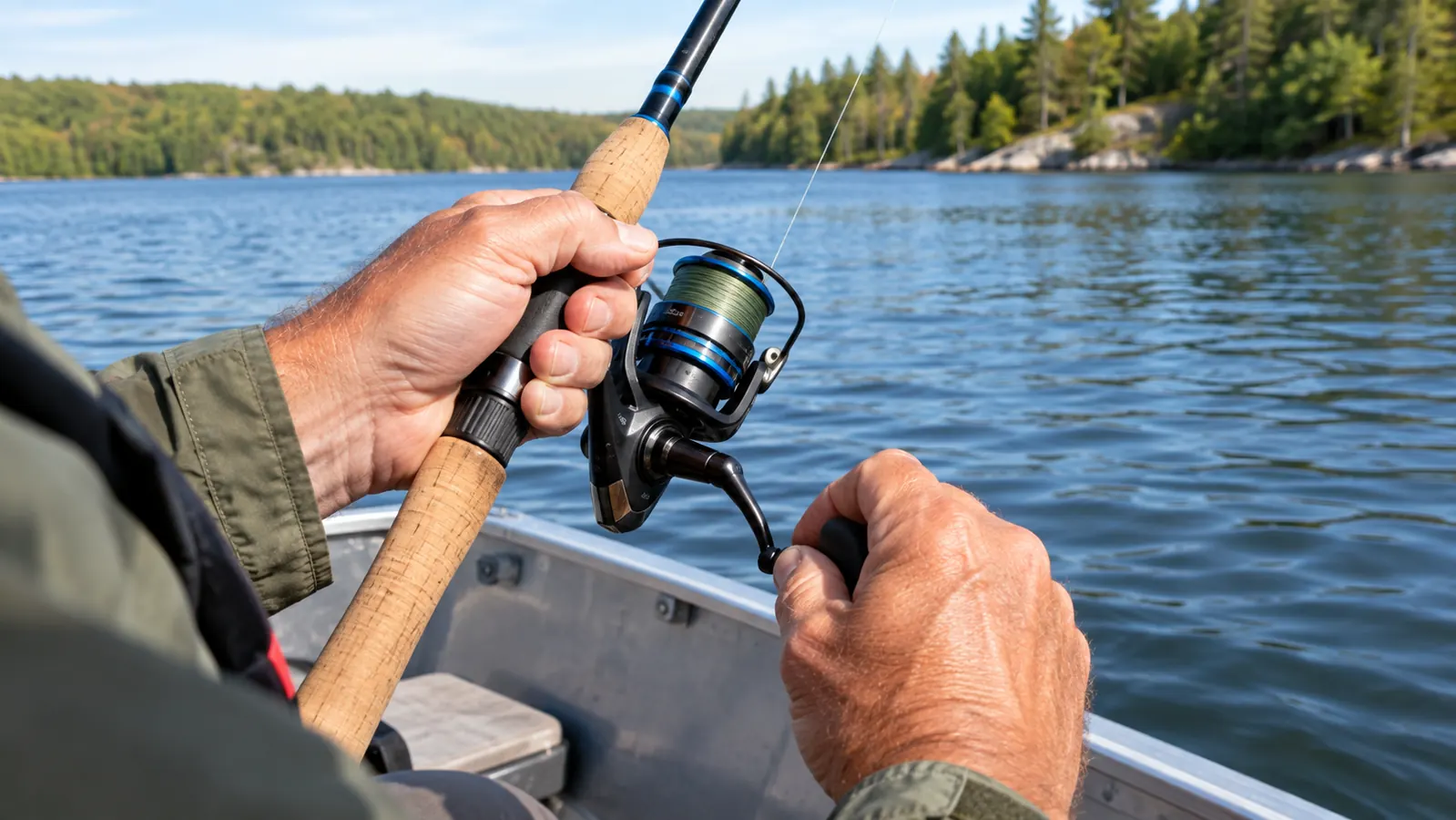
The first thing you notice about the Centron is the drag. KastKing markets it as smooth, and at the low end it is. For the first two-thirds of the adjustment range, the drag slips evenly and predictably. I landed a smallmouth in June, maybe two pounds, on a green tube jig, and the drag never hiccuped once. It ran out a little line on the first run, then held steady while I worked the fish in. That is exactly what you want, and it is the good news.
The bad news is the top end. Push the drag star past about three-quarters of its travel and the resistance climbs faster than it should. You get a hard spot, then a sudden release. On a hot afternoon with a big fish, that is exactly when you do not want it. I had a largemouth in September, probably three and a half pounds, that hit a white spinnerbait near a weed line at Rollins. The fish ran, the drag went from locked to slipping in one jerk, and the hook pulled when the line went slack. That was not entirely the reel's fault, but the sudden release did not help my chances.
I found a workaround after that day. I backed the drag off a quarter turn from the hard spot before I started fishing, and I checked it every time I set up. That keeps the drag in the smooth part of its range, but it means the top end is not really usable. If you are the kind of angler who sets the drag once in the spring and forgets about it, the Centron will surprise you at the wrong moment, and probably on the biggest fish of the day.
I also noticed the drag star itself is small and smooth, which is fine for bare fingers and a little slippery when my hands are wet. I have big hands, and I had to use two fingers to turn it. It is a minor thing, but on a cold morning on the Yuba, with wet hands, it made me wish for a knurled star with more grip. It is not a reason to skip the reel, just a detail nobody mentions.
Line Twist Is Real, and Mostly Your Fault
Line twist is the complaint I see most in the reviews of this combo, and the truth is more complicated than the one-star reviews suggest. Spinning reels twist line when you reel against the drag, and the Centron does not do anything special to prevent that. If you crank while a fish runs, or if you let the line spin freely while a lure drops, you will get twists. I did, plenty of times, especially on the Yuba, where the current pulls the line downstream and makes every retrieve a little off-axis.
Here is what nobody tells you: the line roller on the Centron is the part that makes the twist worse over time. The line roller is the small bearing surface that guides the line onto the spool, and on this reel it has a little bit of play in it from the factory. After a few months of use, that play grew. By July I could feel a slight wobble when I ran my thumb over the roller. That wobble makes the line lay onto the spool unevenly, and uneven line lay invites twist.
I tried two fixes, in order. The first was switching to braided line with a fluorocarbon leader, which reduced the twist a lot because braid lays flatter on the spool. The second was learning to stop reeling against the drag, which took a while because it is a hard habit to break after thirty years of fishing. I would cast, the line would go slack, and my instinct was to crank. I had to tell myself, out loud a couple of times, to lift the rod and let the line come tight before I reeled. Both fixes helped, and by September the twist problem was mostly gone.
I also learned to check the line lay every few casts. The Centron's spool is not deep, and if the line starts to pile up on one side, twist follows fast. A quick check, a few seconds of looking at how the line sits on the spool, and a half turn of the drag if it is off, saved me from most of the bad tangles. It is the kind of habit you pick up with any budget spinning reel, but the Centron rewards it more than most.
If you are new to spinning reels, buy the Centron knowing you will have to learn these habits, because the reel will not forgive you the way a higher-end reel might. A more expensive reel would mask some of the problem with better line lay and a smoother roller. The Centron does not mask anything. It shows you your mistakes, which is either a lesson or a frustration, depending on your temperament.
What Wears Out First
The part that fails first on the KastKing Centron is not the drag washers and not the gears. It is the bail wire. The bail is the metal arm that flips over the spool when you cast, and on the Centron it is thin. Around the end of August, maybe the thirtieth trip, I noticed the bail would not snap closed cleanly. It would catch about half the time, and I had to nudge it with my thumb to close it. That got worse through September, to the point where I was checking it before every cast.
I took the reel apart on a rainy afternoon in October, spread the parts out on a towel in the garage, and the issue was clear. The spring that snaps the bail closed had lost tension, and the bail wire had a slight bend where it meets the rotor. Neither part is expensive to replace, and KastKing sells replacement parts, but you have to be willing to open the reel up. I ordered the parts, put them in, and the bail worked like new. If you are not comfortable with that kind of work, the bail will eventually fail on you at the worst moment, usually mid-cast on a windy day.
The rest of the combo held up better than I expected. The rod blank, a medium-light action in the six foot six length I bought, took the normal bumps of boat life without a crack. The cork handle is not fancy, but it has not crumbled or pulled loose. The reel seat is plastic, and it has a tiny bit of play now, but nothing that affects fishing. The gears feel as tight as they did in April, which surprised me for a reel at this price. I replaced the line twice, once in July and once in October, and both times the spool came off clean and went back on straight.
The one other thing that showed wear was the handle knob. It is a small, smooth plastic knob, and after a summer of use it developed a shiny spot where my thumb rests. It is not a failure, just cosmetic, but it tells you where the reel gets used. I wrapped a little tape around the knob for the fall trips, when the mornings were cold and I fished with gloves, because the smooth plastic was hard to grip.
What Nobody Tells You About the Combo
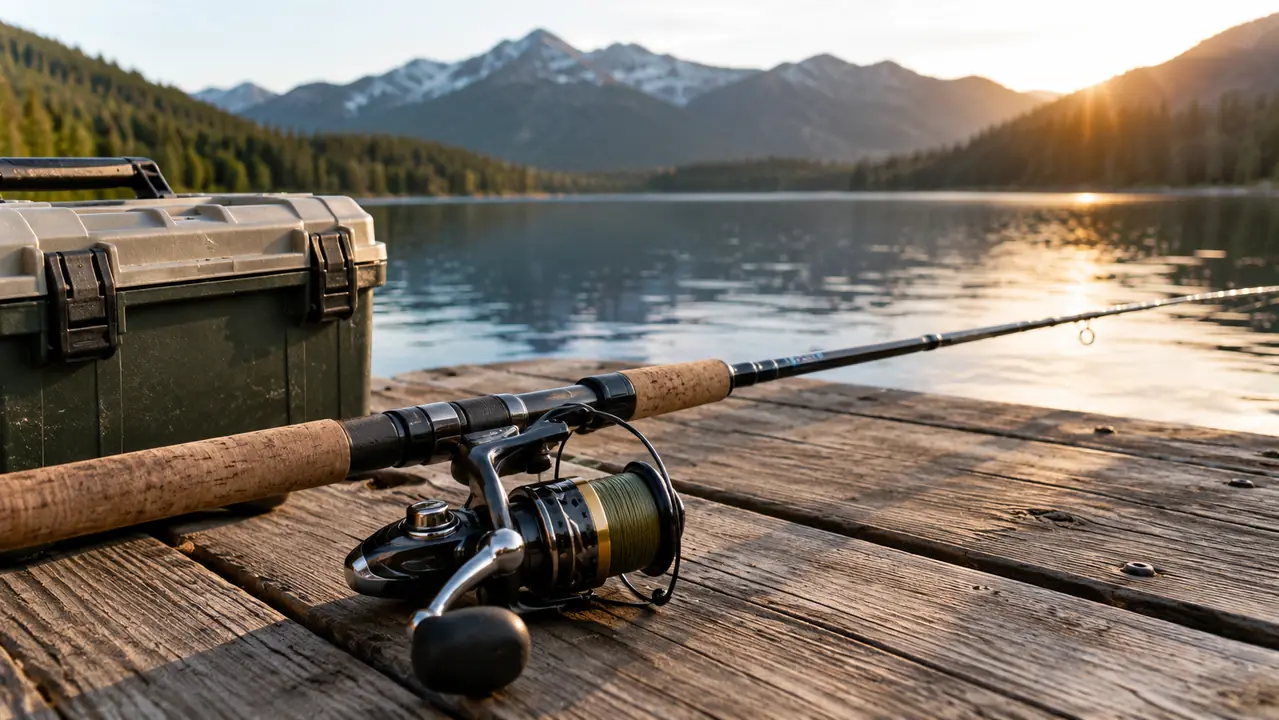
The Centron is sold as a combo, rod and reel together, and that is both a strength and a trap. The strength is that the pairing is balanced. The rod is light enough to cast comfortably all day, and the reel is heavy enough to balance it on the foregrip. I fished eight hours at Rollins in May without my forearm complaining, which is not something I can say for every budget combo I have owned. The balance is the best thing about this package.
The trap is that the rod and reel are not matched to each other's strengths. The rod is a little stiffer than I would pair with this reel for trout. It loads slowly, so light lures like a small spinner or a quarter-ounce jig do not cast as far as they should. You have to put a heavier lure on, a quarter ounce or more, to get the rod to load properly. That is fine for bass and for the bigger stocked trout, but it is a poor choice for small-stream work where you need a delicate presentation.
The other thing nobody tells you is how the combo handles in wind. The rod is long enough, at six foot six, to give you some control, but the reel's spool is on the small side. In a stiff breeze, which the Yuba gets most afternoons in the summer, the line blows off the spool faster than you can control it. I lost a few lures to wind knots before I learned to feather the line with my finger on the cast. That is a technique thing, not a defect, but it is another habit you will have to build.
The last honest note is about the rod's sensitivity. For a budget rod, the Centron is decent, but it is not going to tell you what the bottom feels like. I missed a few bites on the Yuba because I could not feel the subtle tap of a smallmouth taking a worm. I switched to a braided main line with a fluorocarbon leader in July, and that helped, because braid transmits more of the bottom. If you fish by feel, budget for that change.
One more note on the rod action. The Centron rod has a moderate taper, which means it bends through the middle rather than just the tip. That makes it forgiving when a fish runs, and it is part of why the combo is comfortable to cast all day. But it also means you lose some of the hook-setting power you get from a fast-action rod. On the Yuba, where the current is steady, I found I had to set the hook harder than I would with a fast tip, or the hook would not seat. It is a tradeoff, and for shore fishing it is a fair one.
What I Liked
- Price is hard to beat for a complete rod and reel
- Rod and reel are well balanced for all-day casting
- Drag is smooth across most of its range
- Gears held up well after forty trips
- Replacement parts are available if you want to fix it yourself
Where It Falls Short
- Drag gets a hard spot at the top end of its range
- Line roller develops play, which encourages line twist
- Bail wire is thin and loses tension first
- Rod is too stiff for light-lure presentations
- Small reel handle knob is hard to grip with gloves
I lost one good fish to a drag that went from locked to slipping in a single jerk. That is the honest truth about this reel: it is a workhorse, but you have to learn its quirks before you trust it on a big one.
Who This Is For
Buy the KastKing Centron if you need a dependable second rod, if you fish from shore or a small boat, and if you are comfortable doing minor maintenance on a reel. It is a strong value for the money, as long as you treat it as a workhorse, not a showpiece. The drag is fine once you learn its quirks, the line twist is manageable once you change your habits, and the bail is fixable if you are willing to open the reel. For a weekend angler who fishes a dozen times a year, this combo will last several seasons, and it will teach you a few things about spinning reels along the way.
Who Should Skip It
Skip the Centron if you are new to fishing and want a reel that forgives mistakes, or if you plan to fish light lures on small streams. The learning curve for the line twist and the drag is real, and a beginner might get frustrated and blame the gear. Also skip it if you are not willing to do minor maintenance, because the bail will eventually need attention, and a shop visit will cost more than the reel is worth. For those cases, spend a little more on a reel with a smoother drag and a sturdier bail, and save yourself the headaches. The Centron is a good tool, but it is a tool for someone who knows how to use it.
Know what you are buying, and you will not be disappointed
The KastKing Centron is a solid budget combo if you treat it as a spare. Learn the drag, fix the line-twist habits, and watch the bail, and it will serve you for years.
Amazon Check Today's Price on Amazon →