
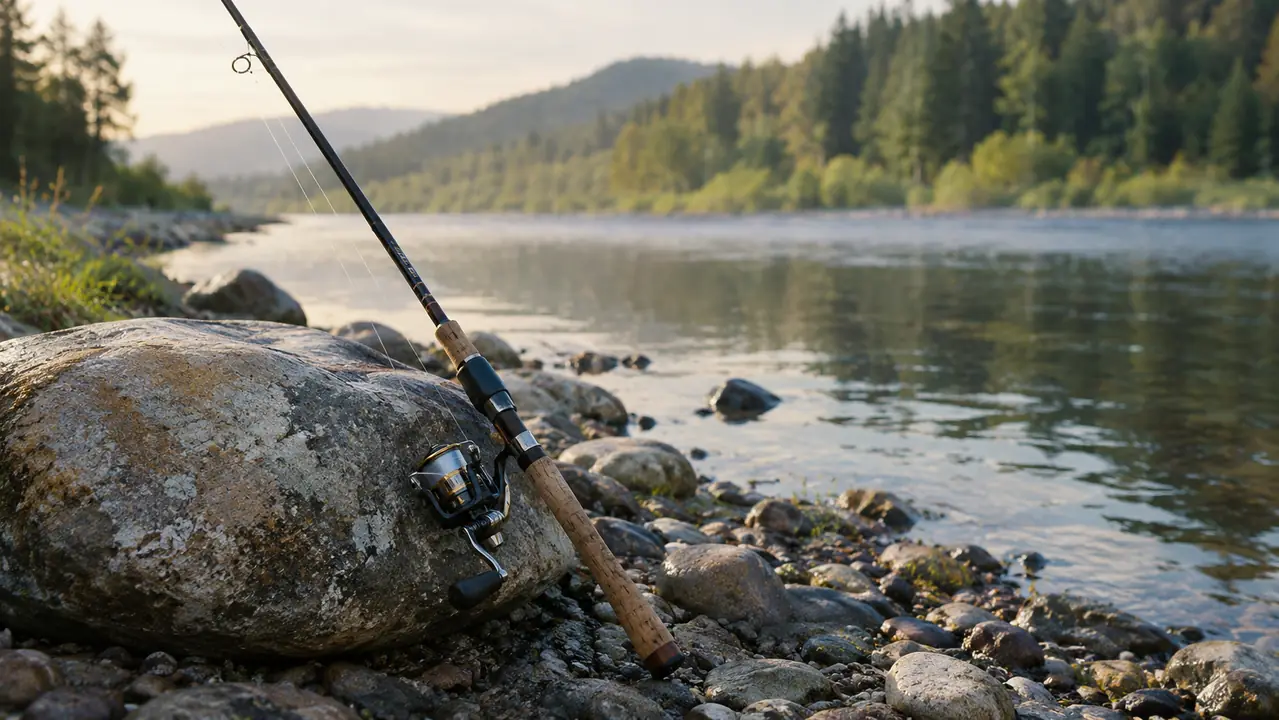
I bought the KastKing Centron spinning combo in late April, mostly because my old rod finally snapped on the drive up to Rollins Lake. The rod tip broke when I shut the tailgate on it, and I did not want to spend the whole season patching gear together. I wanted one combo that could handle trout in the morning and bass by noon, and I wanted it to survive a season of being tossed around the bed of my 2014 Tacoma.
The Centron is a rod and reel in one box. Mine is the spinning version, and it has now been on every trip I have made since May. That is ten or eleven outings on the Yuba River and Rollins Lake, plus a week of car camping in the Tahoe National Forest. This review is what I learned using it, not what the spec sheet says.
The Quick Verdict
A dependable spinning combo that casts well, holds up to a season of rough use, and does not complain when you leave it in the truck bed overnight.
Amazon Check Today's Price →One combo that did everything I asked this season
The KastKing Centron spinning combo has been on every trip I made this year. It casts light spinners, handles bass on jigs, and took the bumps of a full season without breaking. Check today's price on Amazon and see if it fits your kind of fishing.
Amazon Check Today's Price on Amazon →How I've Used It
Most of my fishing is from the bank or from my 14-foot aluminum boat with a small outboard. I fish the Yuba River below the bridge at Highway 49, and I fish Rollins Lake when I want to cover more water. On the river I mostly throw small spinners and bait rigs for rainbow trout. On the lake I switch to a 3/8-ounce jig or a soft plastic for bass. That means the Centron has to do two different jobs, and it gets swapped back and forth on the same trip.
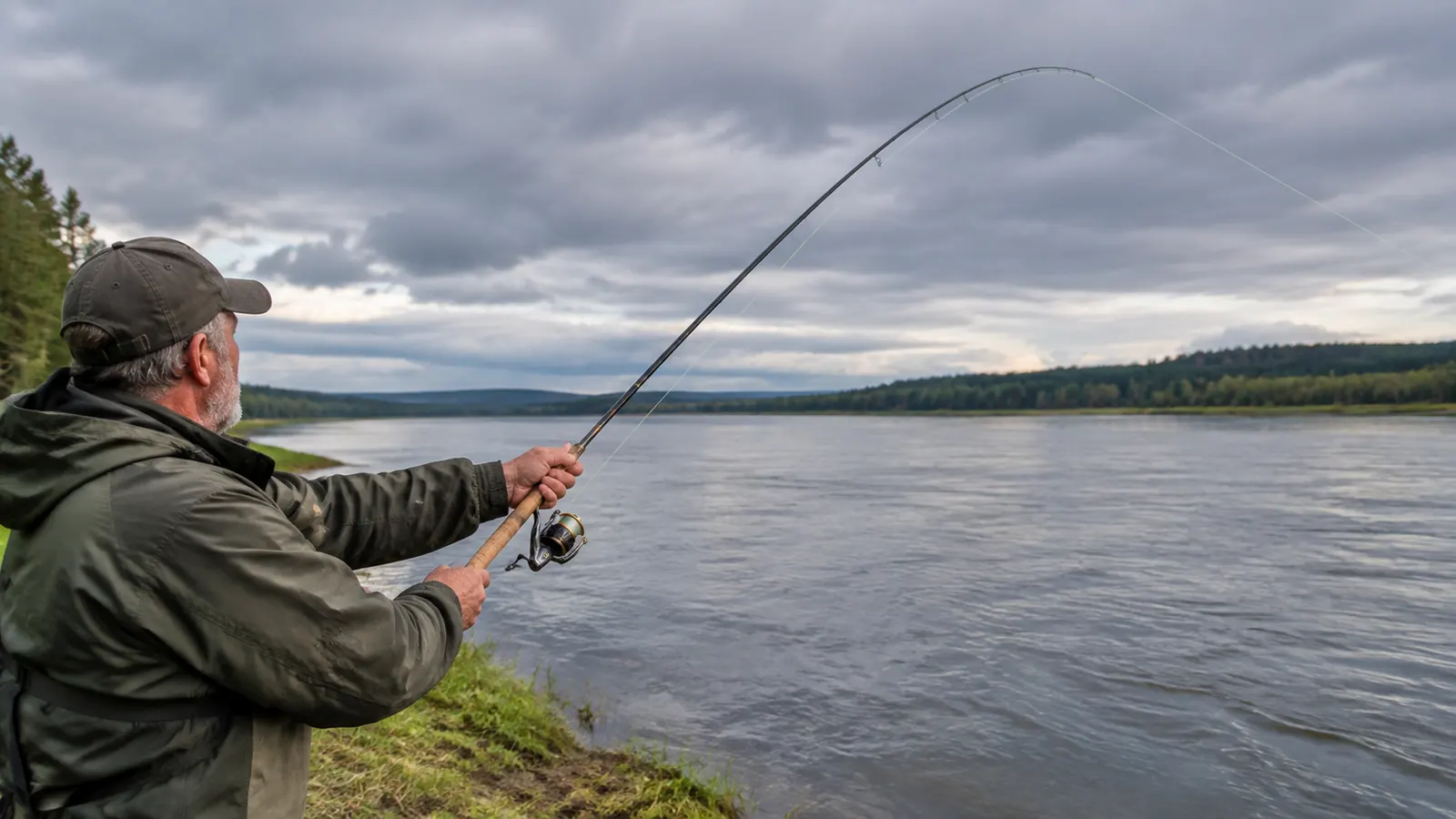
The first trip was the second weekend in May. Denise and I drove up to Rollins Lake on a Saturday morning, and I rigged the Centron with a 1/8-ounce Rooster Tail. I caught a 12-inch rainbow within the first hour, and the drag felt smooth for a reel in this class. The rod has enough backbone to set a hook on a bass, but it still loads up nicely on a light trout spinner. That balance is the reason I kept reaching for it.
I also used it from the boat on Rollins, casting toward the dam and working a jig along the bottom. On the Yuba I waded the gravel bars and made short casts into the seams. The combo never felt heavy in the hand, even after a full morning of casting. I keep the reel on the lighter side of its drag range, and I have not had a bird's nest or a broken line on it.
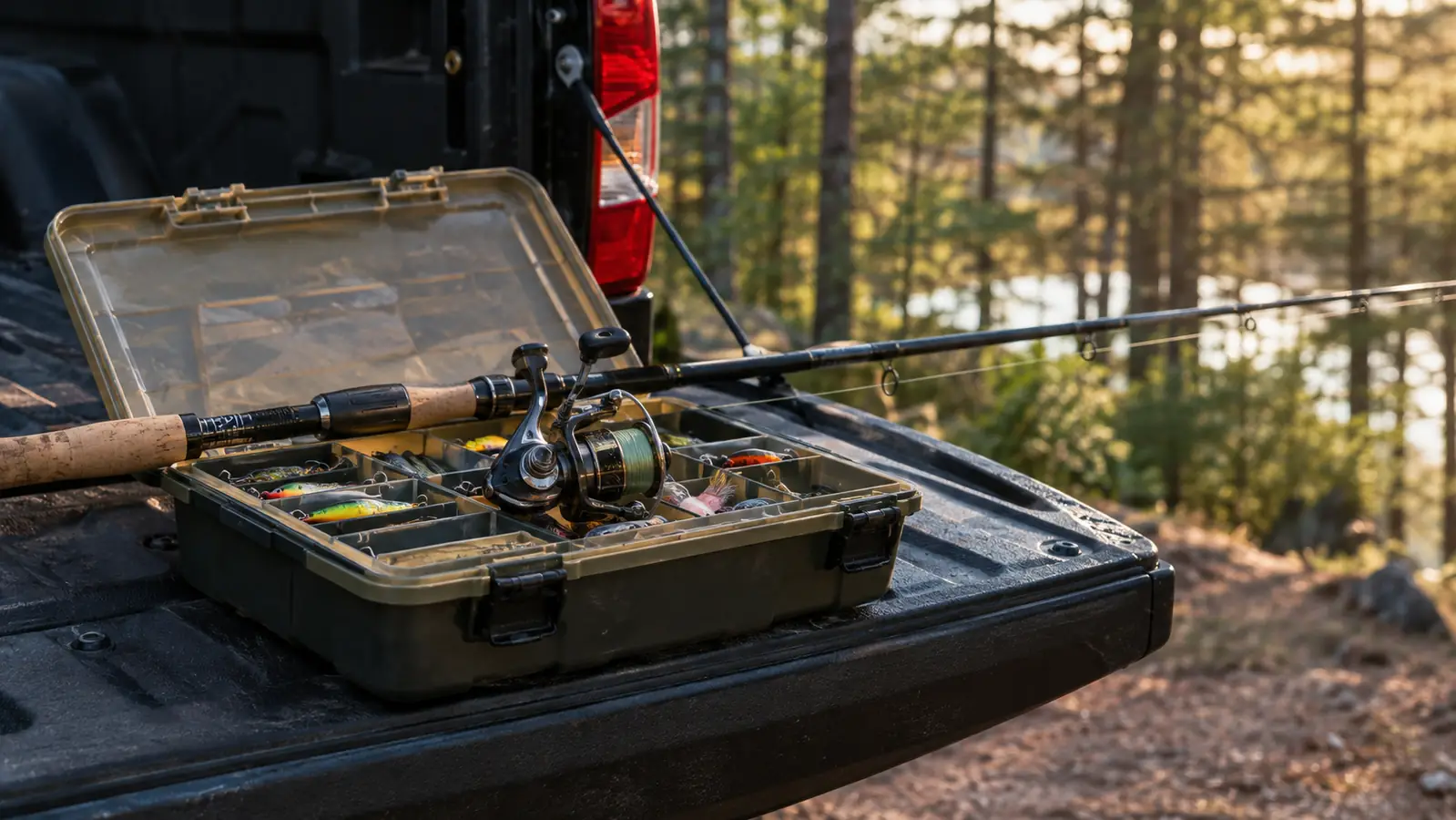
One morning in late May, I left the Centron in the truck bed overnight after fishing the Yuba. The next morning the reel was wet with dew and covered in dust. I wiped it down, sprayed a little reel cleaner on the line roller, and it cast fine all day. That is the kind of thing that tells you a reel is built to be used, not admired.
I keep the Centron rigged with a swivel and a short leader, so I can change lures without retying the main line. That setup has saved me time on the water, especially on days when the trout are hitting one color and then switching to another. The reel's line clip holds the hook securely when I am walking between spots.
Where It Comes Up Short
The Centron is not a premium reel, and you feel that in a few ways. The reel body is mostly graphite, so it does not have the solid feel of a higher-priced reel. After a long day in the sun, the drag knob can be a little stiff to adjust. It is not a problem once you find your setting, but it is not as smooth as a reel that costs several times more.
The rod is also on the soft side for heavy cover. If you fish thick weed beds or flip heavy jigs around docks, the Centron will not give you the backbone to horse a big bass out. I keep mine for open water and river fishing, and I use a heavier rod when I know I am going to be punching through pads. That is a fair trade for a combo that handles light lures so well.
The other thing I noticed is that the reel does not cast as far with very light line. I spooled it with 6-pound test for trout, and a 1/16-ounce jig is about the lightest thing it will throw comfortably. For most of my fishing that is fine, but if you spend your days throwing tiny nymphs or micro jigs, you will want a lighter setup.
On a July trip, I tried to use the Centron to flip a heavy jig into a patch of tules on Rollins Lake. The rod loaded up too much, and I could not get the jig to punch through the mat. I switched to a heavier rod in the boat, and the difference was immediate. If you fish that kind of cover, you will want a second setup.
What the Centron Combo Does Well
The KastKing Centron's biggest strength is casting light lures. A 1/8-ounce spinner will shoot off the spool without much effort, and a 1/4-ounce jig goes where you point it. I have used combos in this price range that feel like you are throwing a wet noodle. The Centron has a crisp enough tip to feel the lure load up, and the reel picks up line smoothly on the retrieve.
The reel's drag is also better than I expected. On a warm evening in late June, I hooked a bass that ran hard toward a sunken log. The drag gave line without sticking, and I was able to turn the fish before it reached the cover. That is the kind of moment that separates a reel you can trust from one that costs you a fish.
I also like the rod's guides. I have dragged the tip through brush on the Yuba and banged it against the side of the boat more times than I can count, and I have not had a guide insert pop out. The reel seat has stayed tight, and the handle has not worked loose. That may sound like a low bar, but it is exactly what a season of abuse will test.
I spent one afternoon testing how far I could cast a 3/8-ounce jig from the bank at Rollins Lake. With a steady wind at my back, I could put it across the first cove, which is roughly forty yards. The line came off the spool evenly and the jig landed without a big splash. That kind of distance is plenty for the shore fishing I do.
How It Compared to What I Had Before
My old setup was a cheap spinning rod I had owned for years, paired with a reel that was starting to grind. The difference was noticeable on the first cast. The Centron cast farther with less effort, and the retrieve was smoother. I did not have to baby the drag, and I did not have to worry about the rod snapping when I leaned on a fish.
I also compared it side by side with a friend's higher-priced combo. His reel felt silkier on the retrieve, and the rod was a little lighter in hand. But the Centron caught the same fish. For a weekend angler who wants one reliable setup, the extra money did not buy anything I could measure in the boat.
That is the honest part of this review. The Centron will not outfish a high-end combo, and it does not pretend to. What it does is give you a dependable rod and reel that you can grab on the way out the door, leave in the truck bed, and not worry about. For my kind of fishing, that is worth more than a slightly smoother drag.
I also spent a morning comparing the Centron to an older spinning reel I had in the garage. The old reel had a slower retrieve and a heavier feel. The Centron was easier to cast all morning, and my wrist did not get tired. That is not a scientific test, but it matches what I felt on every trip.
How It Held Up Over the Season
After ten or eleven trips, the Centron shows normal wear but nothing that affects how it fishes. The reel handle still turns smoothly, and the bail flips over cleanly. The rod has a few scuffs on the blank from being leaned against rocks, but the guides are all intact and the tip is straight. I rinse the reel with fresh water after a day on Rollins Lake, and I oil the line roller a couple of times a month.
The only real issue came in August, when the drag started to feel a little grabby after a week of car camping. I took the spool off, wiped the drag washers, and put a thin coat of reel grease on them. That fixed it, and it has been smooth since. That is normal maintenance for any reel in this class, and it took about ten minutes at the kitchen table.
I also like that the combo comes with a cloth bag, which is more than most combos in this range include. I keep the rod in the bag when it rides in the truck bed, and I think that is why the guides have held up. A little care goes a long way, but the Centron has taken the abuse I have given it without complaint.
At the end of August, I took the Centron apart to clean it for the first time. The inside of the reel was surprisingly clean for a season of use. There was a little grit around the line roller, but the gears looked good and the drag washers were in shape. I put it back together and it felt like new.
What I Liked
- Casts light spinners and jigs with surprising ease
- Smooth drag for the price, handled a hard-running bass
- Rod and reel have held up to a full season of rough use
- Good balance for both river trout and lake bass
- Comes with a storage bag
Where It Falls Short
- Graphite reel body does not feel as solid as higher-priced reels
- Drag knob is a little stiff to adjust on a sunny day
- Rod is too soft for heavy cover and thick weeds
- Not ideal for very light lures below 1/16 ounce
On the Yuba in early June, I cast a 1/8-ounce spinner into a seam and hooked a 14-inch rainbow on the third cast. The Centron loaded up and let me work the fish out of the current without losing it.
Who This Is For
The Centron is for the same kind of angler I am. You fish from the bank or a small boat, you want one combo that can handle trout and bass, and you do not want to spend the whole trip fighting your gear. It is also a good choice if you are replacing a rod that broke and you want something dependable without overthinking it.
If you are a weekend camper who tosses a rod in the truck and fishes when the chance comes up, the Centron will do everything you ask of it. It casts well, it holds up to being knocked around, and it does not need constant attention. That is the whole job description for a camping and fishing combo.
If you are the kind of person who fishes a few times a month and wants to spend more time casting than fixing gear, the Centron fits. It is also a good first combo for someone who is moving up from a closed-face reel and wants something that casts better without a steep learning curve. The spinning version is easy to learn on.
Who Should Skip It
If you are a tournament bass angler or you spend most of your time fishing heavy cover, the Centron will leave you wanting more backbone. The rod is soft enough that you will struggle to pull a big fish out of weeds or lily pads. You would be better off with a dedicated heavy-action rod and a higher-end reel.
Likewise, if you are an ultralight angler who throws 1/32-ounce jigs all day, the Centron is not the right tool. It is a general-purpose combo, and it is happiest with lures in the 1/8 to 3/8 ounce range. For everything else, there is a more specialized setup that will do the job better.
If you already own a good heavy-action rod and a quality reel, the Centron will not replace them. It is a general-purpose tool, not a specialty one. And if you are the kind of angler who notices every ounce of weight and every turn of the handle, you will be happier spending more on a lighter, smoother setup.
The combo that earned its place in my truck
The KastKing Centron spinning combo has earned its place in my truck. It casts light lures, handles bass on jigs, and took a season of Yuba River gravel and Rollins Lake sun without breaking. Check today's price on Amazon and see if it fits your kind of fishing.
Amazon Check Today's Price on Amazon →