
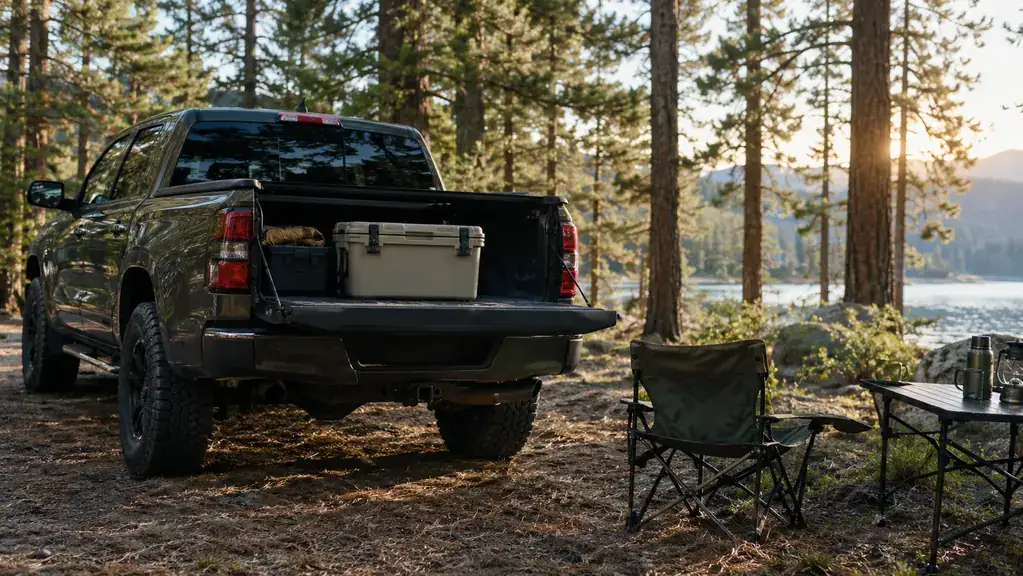
The first cooler I ever kept in the boat was a cheap plastic one I bought at a gas station on the way to Rollins Lake. It leaked across the floor of my 14-foot aluminum boat by the second trip, and the ice was gone by Saturday afternoon. When that one finally cracked, I had to make the same choice a lot of you are facing right now: a Coleman rolling cooler or a YETI Tundra. I have now used both, on the Yuba River and at Rollins Lake, and camping in the Tahoe National Forest, and I can tell you plainly that they are not the same tool. They are not even trying to be the same tool.
Here is the short answer, the one I would give you over the fence. If you camp three or four nights at a stretch, drive out Friday afternoon, and come home Sunday night, the Coleman rolling cooler is the smart buy. It keeps ice for the weekend, it rolls to the campsite, and it costs a working price. If you need ice to hold for a week in August heat, or you beat your gear hard enough to break most coolers, the YETI Tundra earns its higher price. Most weekends, most of us do not need the YETI. I say that as someone who has happily borrowed one.
| Coleman Rolling Cooler | YETI Tundra | |
|---|---|---|
| Cost | A working price, a fraction of the premium brands | A serious outlay, several times more |
| Ice retention | Keeps ice 2 to 4 days in fair weather | Holds ice a week or more in the same heat |
| Moving it around | Wheels and a pull handle, easy with one hand | No wheels, heavy, usually takes two people |
| Build and toughness | Sturdy hard plastic, good hinges, fine for car camping | Rotomolded shell, nearly indestructible, bear-resistant |
| Sealing | Leak-resistant for drips, not built to be dunked | A tight gasket that keeps everything in |
| Warranty | One year | Five years |
| Best for | Weekend trips, tailgates, the boat deck | Long backcountry stays, rough duty |
That table says most of what I need to say, but the numbers in my own life tell it better. On a typical trip I fill the Coleman Thursday night, top it off Saturday morning, and still have usable ice Sunday when I empty it. That is the whole job I am asking a cooler to do. The YETI would do that job for a week and a half, but I am not asking for a week and a half.
How I've Used Both
Some context on how these coolers ended up side by side. I am Russ, I live outside Grass Valley in the Sierra foothills, and I spent thirty-one years as a county road-maintenance foreman before I retired. My truck is a 2014 Tacoma double cab, and I keep a 14-foot aluminum boat with a small outboard for trout and bass on the Yuba River and at Rollins Lake. Most of my camping is car camping, three to five nights in the Tahoe National Forest, with my wife Denise along on most trips. That is the use these coolers get: short, honest, weekend work.
I bought the Coleman rolling cooler three summers ago when the gas-station cooler finally gave out. I borrowed my friend's YETI Tundra for a five-day trip last July, partly because I wanted to see if the price gap was real. I also know a couple of guys who run YETIs full time, so I have watched them live in the back of their trucks for years. Between my own use and theirs, I have a fair picture of what each cooler does well and where it falls short.
One thing I have learned after three summers with the Coleman and a handful of trips with the YETI: the cooler that wins is the one that fits your trips, not the one with the better spec sheet. A cooler that keeps ice for eight days does you no good if you never stay out eight days, and a cooler that rolls is a blessing every single time you pack the truck. I have tried to keep that in mind for every word below.
Where Coleman Wins
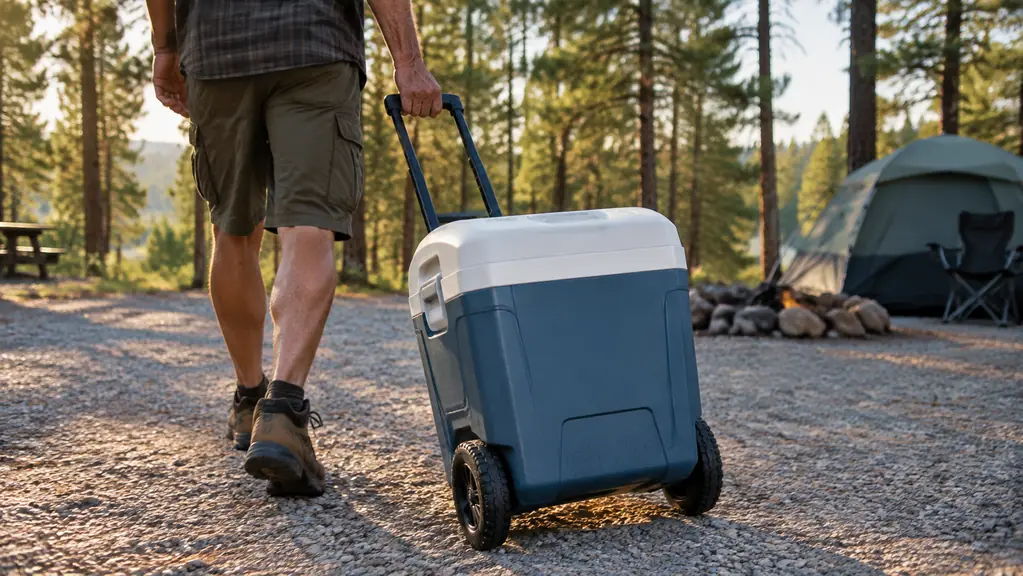
The Coleman wins on the things you deal with every single trip. It has wheels and a pull handle, and I can drag it across a gravel campsite with one hand while I carry the rods in the other. The YETI Tundra, for all its toughness, does not roll. You lift it. Loaded with ice and a weekend of food, that is a two-person job, and on a Sunday evening when you are tired, it is the last thing you want to wrestle into the back of the Tacoma. Denise and I can move the Coleman between us without planning it. The YETI takes a conversation.
It also costs a fraction of the premium brands, which matters when you are retired and replacing gear on a budget. Because it costs less, you treat it like a workhorse. I set it on the tailgate, slide it around the boat, park it on the granite at Rollins Lake, and I do not wince when it picks up a scratch. When a wheel finally wears out, I will replace the whole cooler without losing sleep. That is a freedom the YETI does not give you. When you have that much money sitting in a box, you start treating it carefully, and careful is the opposite of how a boat cooler should be treated.
The drain plug is worth a mention too. The Coleman has a drain at the bottom that I open over the tailgate, and the meltwater runs out clean. I rinse it with the hose after every trip, and it has never held a smell. The leak-resistant lid has done its job on the boat deck; a little slosh on a rough afternoon has not made a mess of the floor. It is not built to be dunked, and I would not trust it upside down, but for the way I use it, it has been dry and clean for three summers.
Where YETI Wins
I borrowed my friend's YETI Tundra for that five-day trip last July, and I will not pretend otherwise: it held ice the whole time, through afternoons in the high eighties, up in the Tahoe National Forest. The Coleman would have been done by day three. If you need cold for a week, or you fish somewhere there is no ice to restock, the YETI's rotomolded shell and tight gasket are the difference between a cold drink and a warm one. That is the entire reason for the price gap, and it is a real reason.
The YETI is also the tougher box. The rotomolded construction takes a beating that would crack a conventional cooler, and the model my friend owns is certified bear-resistant, which matters if you camp where the bears are bold. The lid seals with a gasket that keeps water and air out, so it doubles as a dry box for things you do not want wet. It comes with a five-year warranty, and it holds its value better than almost anything you can buy for a campsite. If you ever sell it, you get a good chunk of the purchase price back. Those are honest reasons to pay the premium.
I will add one thing that surprised me. The YETI is easier to clean than I expected. The gasket comes out, the inside is smooth, and the drain plug sits at the low corner so the rinse water runs out completely. For a cooler that costs what it costs, the details are done right. But here is the trade nobody mentions: it is heavy even when it is empty, and it is heavy when it is full, and neither my back nor my truck wants to move it around a campsite every weekend. That weight is the price of the toughness.
Ice Retention, Up Close
Let me be precise about ice, because that is the number everyone quotes and it is easy to read too much into it. Coleman rates the rolling cooler to keep ice up to four days. In my experience, that is true in fair weather if you start with a full bag of ice, keep the lid closed, and do not park it in the sun. On a hot July weekend at Rollins Lake, I have seen it go from a full bag Thursday night to a few small cubes Sunday morning. That is four days, and it is exactly what I need.
The YETI's numbers are better, and they are real. My friend's Tundra came back from five days in the high eighties with ice still in the bottom, enough to keep the drinks properly cold on the drive home. If I ran a longer trip, or fished where there is no place to restock, that extra day or two would be the whole difference. But I do not run longer trips, and there is always ice at the store near the lake. So the YETI's advantage, for me, is a safety margin I almost never use.
How They Fit the Truck
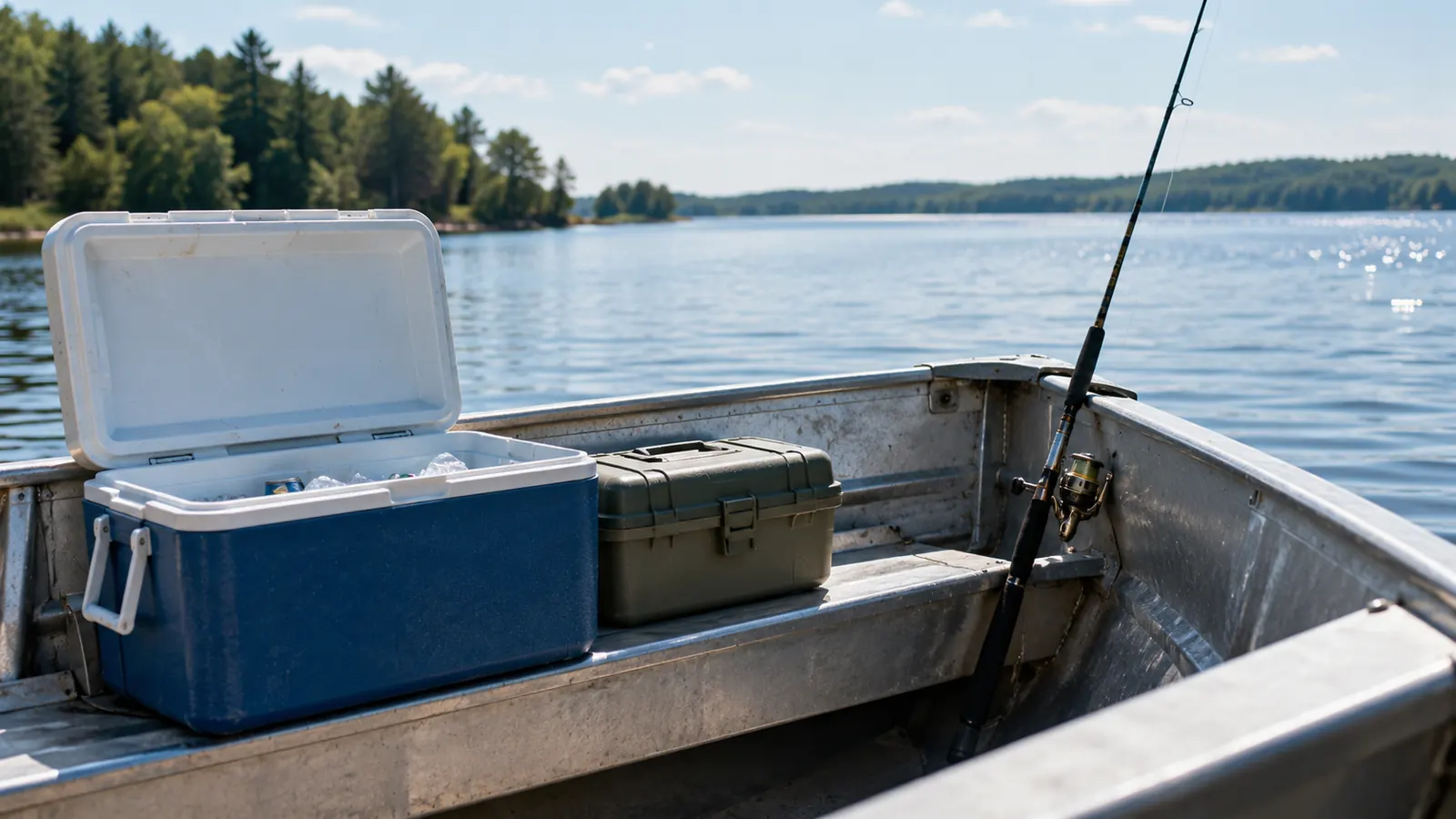
Practical detail that matters more than you think: how the cooler fits in the truck. The Coleman rolling cooler sits flat in the bed of my Tacoma with room to spare for the tent, the chairs, and Denise's camp bag. I slide it against the tailgate so I can reach the handle without climbing in. The wheels are the right height that it rolls off the tailgate onto the ground without a thump that spills anything.
The YETI Tundra takes up more room and more thought. It is a bigger footprint, it is heavier to lift over the tailgate, and because it is not on wheels, you cannot just roll it into place. It wants to sit on the floor of the bed, and then you are reaching down into the bed every time you want a cold drink. None of that is a reason to avoid the YETI. It is a reason to think about how you actually use a cooler before you spend the money.
The YETI held ice for five days in the high eighties. The Coleman would have been done by day three.
End the 'ice is gone by Saturday' problem
For weekend trips, tailgates, and the boat deck, the Coleman rolling cooler is the honest buy. It rolls, it holds ice for the trip, and it costs a working price. I have run mine for three summers without complaint. Check today's price on Amazon.
Amazon Check Today's Price on Amazon →Who Should Buy Which
Buy the Coleman rolling cooler if you are a weekend camper like me, driving out Friday and home Sunday, packing the family cooler for the tailgate or the boat, and you would rather spend the difference on gas and bait. It will keep your ice for the whole trip, it rolls, and you will not flinch when it gets scratched. Buy the YETI Tundra if you take trips longer than four days, if you camp where bears wander through, or if you simply want one cooler that will outlast everything else you own. There is no wrong answer, only the wrong tool for the job. For the job most of us do most weekends, that is the Coleman.
One more honest note. I still borrow my friend's YETI when I know I will be out five days with no ice to restock. I do not own one, and I do not plan to, because it would sit in the garage eleven months of the year doing nothing that the Coleman could not do. If you are the kind of person who buys once and never wants to think about it again, the YETI is a fine answer. If you are the kind who wants a cooler that does the job and leaves money for the rest of the trip, the Coleman is yours.
The Verdict, Plainly
Here is the whole thing in one breath. The Coleman rolling cooler is the right cooler for the way most of us actually camp: short trips, car camping, the boat deck, the tailgate. It rolls, it holds ice for the weekend, it costs a working price, and when it gets scratched you do not care. The YETI Tundra is the right cooler for people who need a week of ice, camp where bears are bold, or want to buy one box and never think about it again. I own the Coleman. I borrow the YETI. That arrangement has served me well for three summers.
My pick for the weekend: the Coleman rolling cooler
Three summers on my boat and in the Tahoe National Forest, and it has never let a trip down. If you are replacing the cooler that finally gave out, this is where I would start. See today's price on Amazon.
Amazon See Today's Price on Amazon →